













- 80+ Years of Heritage
Kerala Ayurveda has been a trusted name in authentic Ayurvedic healing for over 80 years, carrying forward the wisdom of Ayurveda while making it relevant to modern life. - A Full-Spectrum Ayurveda Organisation
Today, we serve over a million people across India and the US through wellness resorts, hospitals, clinics, academics, and manufacturing, all rooted in the timeless principles of Ayurveda’s 8,000-year-old science. - Knowledge Backed by Experience & Evidence
Our approach goes beyond classical Ayurvedic texts. We draw upon clinical experience, relevant research, and contemporary understanding to create responsible and practical health and wellness guidance. - Authenticity with Accessibility
We strive to make Ayurveda accessible and relevant to today’s consumers without compromising its authenticity or traditional foundations. - Safety First
Every recommendation is developed with safety as a priority, with potential contraindications and important precautions clearly communicated.
Key Takeaways
1. Your scalp type matters more than following a generic hair-oiling routine.
2. Dry, sensitive and oily scalps need different amounts of oil, different temperatures and different contact times.
3. Even massage pressure should change depending on whether your scalp is Vata, Pitta or Kapha-dominant.
4. Too much oil, too much heat or leaving oil on for too long can sometimes make itching, buildup or irritation worse.
5. The best routine is one you adjust based on how your scalp feels the next day, rather than repeating the same method out of habit.
Introduction
Yes, you can absolutely be oiling your scalp the wrong way even if you’re using great oil and following a consistent routine. The problem usually isn’t the oil. It’s a mismatch between your method and your scalp type.
Ayurveda frames this through the concept of Dosha, your body’s dominant functional pattern, which shows up on your scalp as specific tendencies. Vata tends toward dryness and a weakened skin barrier. Pitta runs hot and reactive. Kapha leans toward excess oil, heaviness, and buildup. The same oil, the same amount, the same massage technique can calm one scalp type and aggravate another. That’s the concern most people miss.
This article walks you through how to read your scalp’s signals, understand why generic oiling routines backfire, and then adjust four practical levers: quantity, temperature, pressure, and timing to build a routine that actually fits your scalp. Before switching products, start by noticing the pattern: Is your scalp feeling tight or greasy? Cool or warm? Lightly flaky or sticky with residue?
Identifying Your Scalp Type: Vata, Pitta, or Kapha Imbalances
Vata & Pitta Scalp Signs
Start with what you can already see and feel. Scalp tightness due to extreme dryness after washing. Flakes on dark clothing. Roots that sting. A scalp that feels hot by evening. These aren’t random complaints, they're pattern clues.
A Vata scalp typically looks dry and under-lubricated. You’ll notice fine, powdery flakes, brittle strands, split ends, frizz, and that “tight” feeling, especially after shampooing or during cold, windy weather.Think of it as a scalp that doesn’t produce enough of its own moisture.
A Pitta scalp tells a different story. Here, the signs are redness, warmth, tenderness, a burning sensation, sweating, and irritation. Sometimes earlier greying or thinning shows up too.Early hairfall is another feature of Pitta scalp too. In simple terms, Vata leans toward dryness and weak barrier function, while Pitta leans toward inflammation and excess heat.
To sort them out, observe your scalp for three to five days before changing anything. Notice how it feels by afternoon, after exercise, and the day after oiling. Dry, powdery flakes point more toward Vata. A scalp that feels hot, or reacts quickly to friction points more toward Pitta.
Kapha & Mixed Scalp Signs
Kapha is essentially the opposite pattern: excess moisture, heaviness, slow buildup. A Kapha scalp gets oily quickly, feels coated at the roots, and may itch from accumulated sebum, sweat, and residue. Flakes here tend to be thicker or stickier than the fine, powdery Vata kind. Hair often feels dense, limp, or weighed down even when it isn’t damaged.
Classical Ayurvedic descriptions also link Kapha-predominant scalp conditions with moisture and microbial overgrowth, which helps explain why buildup often comes with itch and congestion.
Most people, though, don’t fit one box perfectly. You might have a Vata-Pitta scalp dry yet sensitive. Or a Pitta-Kapha scalp oily but also red and itchy. Seasons shift things too: winter often worsens Vata dryness, summer amplifies Pitta heat, and humid spring can increase Kapha oiliness and buildup.
Before deciding how to adjust your oiling routine, run through a simple checklist: dry or oily? Cool or hot? Light flakes or sticky buildup? Calm or reactive? Once you can name the pattern, the mistakes become much easier to spot.
Reviewed by Ayurvedic Experts

Dr. Shweta Netke
BAMS, 15+ years of experience.
Medical Writer
Dr. Shweta Vijay Netke is an Ayurveda Doctor and expert with over 15 years of experience in Ayurveda, wellness, and beauty. She writes to make the timeless wisdom of Ayurveda simple, practical, and relevant to modern lifestyles.
Why One-Size-Fits-All Oiling Fails: Dosha-Specific Needs Explained
More oil does not automatically mean healthier hair. What matters is how the oil suits your scalp type. A Vata scalp is typically dry and rough, so it may benefit from richer nourishment, gentler application, and longer contact time. A Kapha scalp already tends to be oily and congested, so heavy or excessive oiling can leave the roots greasy, trap sweat and residue, and worsen itching or sticky flaking.
Pitta scalps are usually warmer and more reactive, so strongly heated oil or vigorous massage may increase heat, stinging, or discomfort. This is why one fixed oiling routine does not work for everyone. The key is to adjust the amount of oil, its temperature, massage pressure, and contact time to match your scalp’s baseline condition.
Did You Know?
"Sebum is already your scalp’s built-in oil, so adding a heavy layer on a greasy scalp can act less like nourishment and more like blockage."
Tailoring Oil Quantity, Temperature, and Timing to Your Dosha
Now that you know why fixed routines break down, the practical step is adjusting three dials: how much oil, how warm it is, and how long it stays on.

The underlying logic is straightforward dryness needs more lubrication and longer contact, while heaviness and buildup need less. Heat-sensitive scalps sit in the middle, needing nourishment without extra thermal load.
Frequency and Safety
Be especially careful around important points which are sensitive functional areas such as the temples, crown, and the point between the brows. These regions are treated gently in classical practice, not pressed hard. Stop immediately if you feel burning, dizziness, tenderness, or new itching.
For weekly frequency, Vata often does well with 2–4 sessions. Pitta usually benefits from 1–3 moderate sessions. Kapha often responds best to 1–2 shorter sessions, usually right before washing. Done correctly, scalp massage should leave you calmer, less dry, and more comfortable by the next day.
Ayurveda also cautions that wrong technique can worsen Ama, a term for poorly cleared metabolic buildup or aggravate the scalp enough to contribute to hair fall. Knowing the right method naturally leads to the next question: which common mistakes undo the benefit?
Classical sources on head oiling and retention therapies like Shirobasti or Murdha Thailam consistently scale duration down for Kapha and up for Vata, with Pitta in between. The reasoning makes sense in modern terms too. A dry scalp has weaker surface lubrication, so warm oil spreads better and softens roughness. A hot, reactive scalp may feel soothed by oil initially, but higher temperature can increase flushing and irritation. An oily scalp already produces plenty of sebum, so adding too much external oil can act more like a seal trapping debris than actual nourishment.
If you’re figuring out your routine, start with less than you think, especially for Pitta and Kapha. Then adjust based on next-day feedback. Greasy roots, itching, or a heavy film usually signal mistakes in quantity or timing, not necessarily the wrong oil.
With those settings chosen, the next question becomes technique: how much pressure, and how long should the massage itself last?
Personalizing Massage Pressure and Duration in Ayurvedic Scalp Oiling
Once oil quantity and temperature are set, the next variable is touch. In Ayurveda, pressure and duration aren’t afterthoughts; they're part of the treatment itself. Friction can either calm the scalp and nervous system or add more irritation, heaviness, and shedding.
Match Pressure to Your Scalp Type
For a Vata scalp, use gentle, slow, steady circles with your fingertips, plus smooth front-to-back strokes. This suits dryness. It helps oil spread without scraping an already fragile surface.
For a Kapha scalp, use firmer, more stimulating strokes: brisk circles, longer rubbing movements, and light kneading across the scalp base and crown. The goal here is to mobilize oil, sweat, and residue not leave the roots feeling more coated.
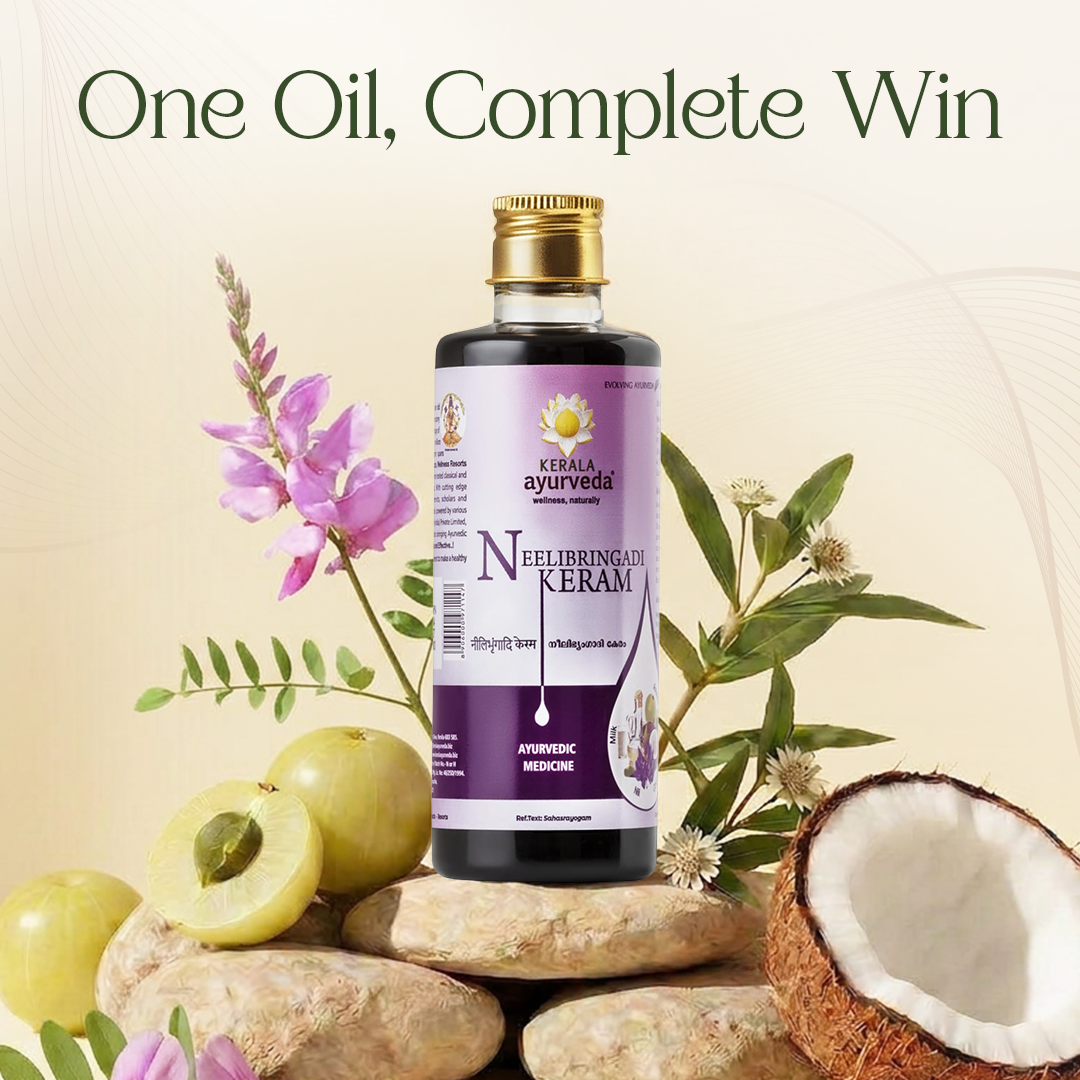
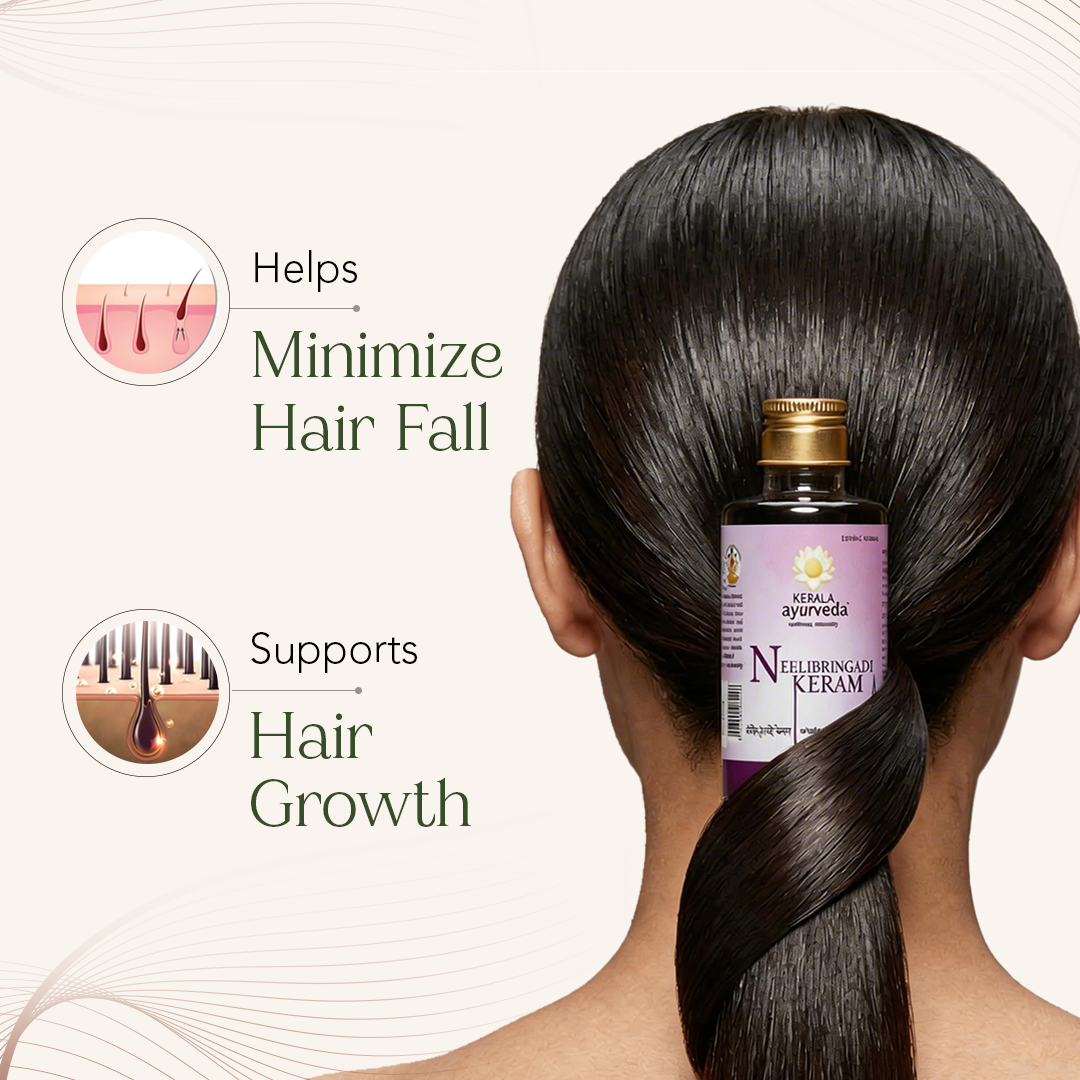
For a Pitta scalp, keep things light and short. Massage for about 5–7 minutes with gentle pressure, then let the oil sit quietly. Longer or more vigorous rubbing can increase heat and reactivity instead of soothing it. A cooling oil such as Neelibhringadi Keram works best when the massage feels calming, not intense.It cools down fiery Pitta irritation, balances oily Kapha scalps without clogging pores, and deeply conditions dry Vata hair when combined with a rich coconut oil base. Plus, by reducing stress at the follicle and supporting pigment-producing cells, it helps delay premature greying while keeping the scalp calm and nourished.
Common Scalp Oiling Errors That Disrupt Dosha Balance
“Adjust the routine by the scalp’s response the next day, not by habit. Greasy means reduce, burning means cool, scalp tightness means nourishment.” — Dr. Devika, An Ayurveda doctor at Kerala Ayurveda.
That’s honestly the simplest rule for personalizing your oiling routine. Signs that the herbal oil itself may be wrong for your dosha include worsening itch, new bumps, excess shedding after application, a heavy film that’s hard to wash out, or a scalp that feels hotter rather than calmer.
If symptoms persist or if you’re dealing with dandruff, infection, or ongoing hair loss consult an Ayurvedic practitioner. Once you can recognize these errors and connect them to your scalp’s pattern, you can self-correct toward a routine that genuinely works for you.
Need help choosing the right support?
Consult online with our Ayurvedic experts for personalized health guidance.
 Request Consultation


MORE FROM AYURVEDA
Related articles
Too Many Hair Products, Too Little Clarity: Can One Ayurvedic Oil Like Neelibhringadi Keram Do More?
The blog explores why hair fall, frizz, dandruff, and premature greying may stem from interconnected scalp concerns, rather than requiring separate solutions. It brings together...
Your Kitchen Already Holds the Cure: Everyday Indian Foods That Fight Hair Fall
Healthy hair starts with consistent nourishment, and everyday Indian meals can provide many of the nutrients it needs. Dal, curd, eggs, leafy greens, nuts, and...
Ayurveda Doshas: Guide to the Three Dosha Types
The Tridosha in Ayurveda (Vata, Pitta, Kapha) are energetic forces of nature, functional principles that help us better understand ourselves and the world. Vata, Pitta,...
Natural Remedies for Premature Greying of Hair
Your hair responds to ageing as much as your skin does. Having grey strands in your 40s is natural. However, it can concern most people...
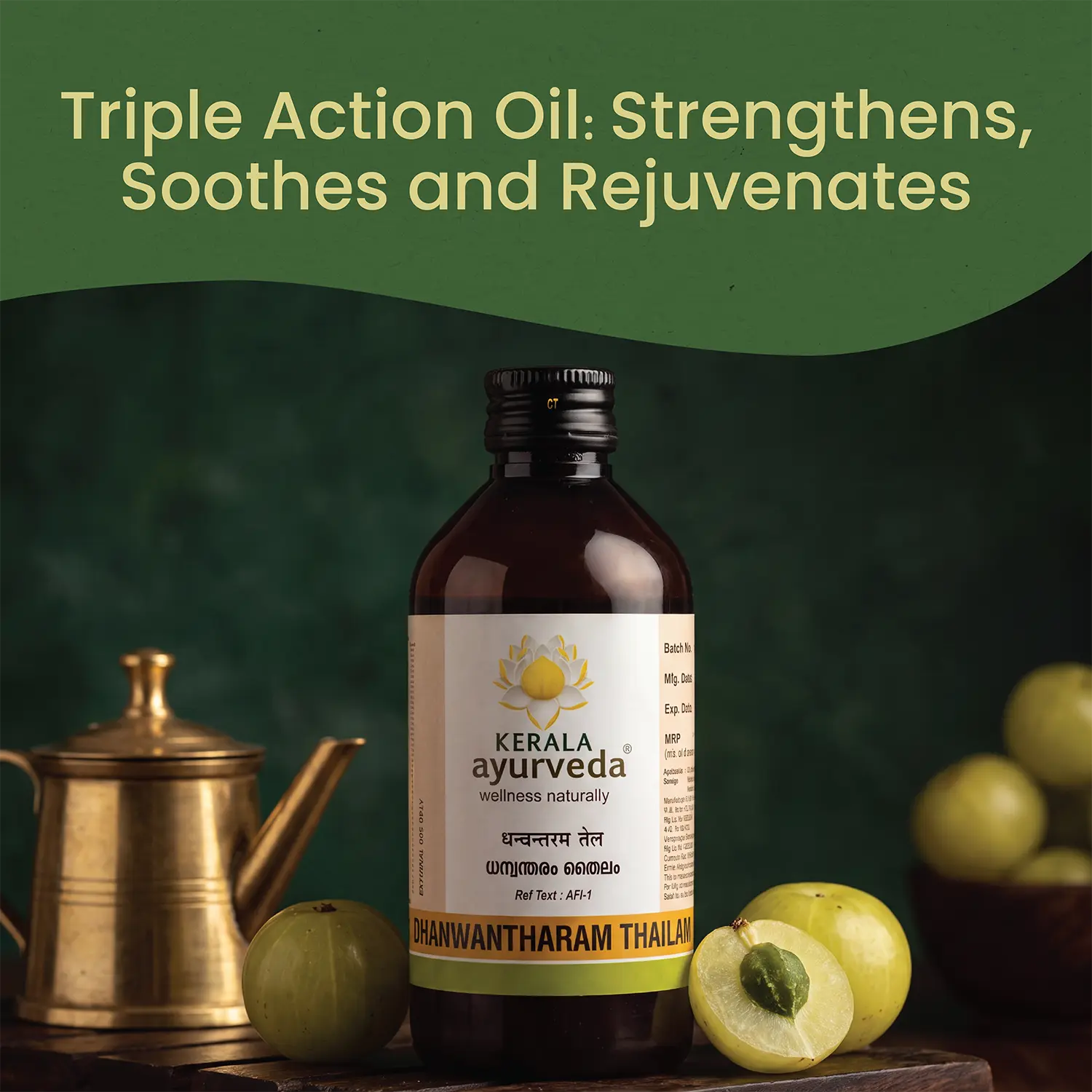
How Can Dhanwantharam Thailam Help in Body’s Well-Being?
What Is Dhanwantharam Thailam? Dhanwantharam Thailam is an Ayurvedic formulation of potent herbs and ingredients. This unique formulation with around 28 herbs is used to...
A Comprehensive Ayurvedic Guide to Understanding and Optimising Vata Dosha
Introduction to Ayurveda Ayurveda is the ancient science that holds traditional knowledge and secrets to life as we know it passed over from hundreds of...
Ayurvedic Thailam: Types, Uses and More
What is Thailam? Ayurvedic massage oils used for ayurvedic treatments, skin and hair care, post and antenatal care etc., are called Ayurvedic Thailams. These are...
Triphala Guide: What, Benefits and Side-effects
What is Triphala? A Complete Guide of Origin, Benefits, and Everything Else What is Triphala Churna? Triphala is an Ayurvedic mixture of three dried fruits,...