














Key Takeaways
Reviewed by Ayurvedic Experts

Dr. Shweta Netke
BAMS, 15+ years of experience.
Medical Writer
Dr. Shweta Vijay Netke is an Ayurveda Doctor and expert with over 15 years of experience in Ayurveda, wellness, and beauty. She writes to make the timeless wisdom of Ayurveda simple, practical, and relevant to modern lifestyles.

Dr. Prasanna Kulkarni
M.D., M.S., 22+ years of experience
Senior Ayurveda Physician
Dr. Prasanna Kulkarni is a senior Ayurveda physician, educator, and researcher with over 22 years of experience. Specialising in Swasthavritta, he bridges classical Ayurveda with modern healthcare and AI. Through his writing and medical review, he aims to make Ayurveda accessible, credible, and relevant to everyday health.
Did You Know?
" Greying is not just a dye problem of the hair shaft, because chronic stress can deplete the melanocyte stem cells inside the follicle that are needed to make future pigment at all."
Ayurvedic Perspectives on Early Greying: Causes and Remedies

How Ayurveda Frames the Problem
Ayurveda describes premature grey hair as palitya, most often linked with aggravated Pitta, a pattern of excess heat and overactivity in the body. If that sounds abstract, the modern parallel is oxidative stress: the kind of cellular strain that damages pigment-making cells in the hair follicle.
Classical texts also note that hair quality depends on well-nourished Dhatus. Irregular meals, poor sleep, chronic stress, smoking, and nutrient-poor diets are seen as root disruptors rather than surface issues. That lines up surprisingly well with current evidence. When pigment cells lose protection and the follicle environment becomes stressed, early greying becomes more likely.
Ayurveda views premature greying as a reflection of deeper internal imbalance rather than a problem limited to the scalp. It looks at factors such as aggravated Pitta, weakened tissue nourishment, digestion, stress, sleep, and daily habits that may influence hair health over time. The approach therefore focuses not only on topical hair care, but also on restoring balance through diet, lifestyle, appropriate herbs, and supportive Ayurvedic therapies as recommended by an Ayurveda Vaidya.
What Traditional Care Looks Like
In practice, traditional approaches often combine gentle purification methods like Panchakarma, scalp support, and dietary changes. Texts describe Panchakarma-style cleansing and local therapies such as Nasya and head oiling after proper assessment, not as DIY fixes for everyone. In Ayurveda, Nasya is traditionally used to support head and scalp health by balancing doshas and nourishing the tissues associated with hair. In early greying, it may be included as part of a broader Pitta-balancing and rejuvenative routine, ideally under practitioner guidance
Herbs commonly used include Bhringraj, Amla, and Neeli. In simple terms, they’re used to cool excess heat, support scalp condition, and protect hair fiber. Amla also brings antioxidant activity, which gives some modern plausibility to its traditional use.Neeli (Indigofera tinctoria) is traditionally valued in Ayurveda for supporting natural hair colour and is commonly included in formulations used for premature greying.
Expectations matter, though. Current evidence does not support a reliable reversal of established genetic greying. Correcting deficiencies, lowering oxidative stress, and using supportive Ayurvedic care help slow further greying and improve the quality of new hair growth. That naturally brings us to the daily habits that may keep aggravating Pitta and the pigment cells underneath.
Building a More Complete Solution for Premature Greying

Start With What’s Measurable
The most useful plan for premature grey hair is layered, not single-remedy. Start by separating likely genetic greying from potentially reversible contributors.
If greying is rapid, unusually early, patchy, or comes with fatigue, weight change, or other symptoms, it’s reasonable to ask a healthcare professional about a complete blood count, ferritin (for iron stores), vitamin B12, copper, and thyroid tests such as TSH and free T4. If an autoimmune cause is suspected, further testing may be needed.
Layer In Ayurvedic Support
Alongside that parameters check-in, Ayurveda would focus on reducing excess Pitta roughly, internal heat and overstrain through steadier meals, better sleep timing, stress regulation, and scalp support like gentle head massage with Neelibhringradi Keram. These steps don’t fight genetics, but they may improve the follicle environment and reduce ongoing strain from deficiencies, oxidative stress, and lifestyle triggers.
“Treat early greying like a stack of small causes, not a single enemy correcting what is measurable, calm what is stressful, and give the body time to respond.” - Dr. Sreelakshmi our in house doctor at Kerala Ayurveda
Setting Realistic Expectations
You might wonder about newer options like PRP or low-level laser therapy. Right now, evidence for restoring natural pigment is limited and far weaker than for hair shedding or density. They shouldn’t be viewed as proven fixes for early greying.
Honestly, realistic expectations matter most here. Correcting a deficiency may slow further greying and sometimes help new hair regain some color. But established genetic greying usually does not fully reverse. The strongest approach isn’t chasing one remedy, it's building a practical routine that addresses the multiple factors quietly stacking against your pigment cells.
Support Early Greying With Neelibhringadi Keram
If stress, heat, and daily strain seem to be showing up in your hair sooner than expected, a gentle Ayurvedic oiling routine may help support the scalp and hair roots over time.
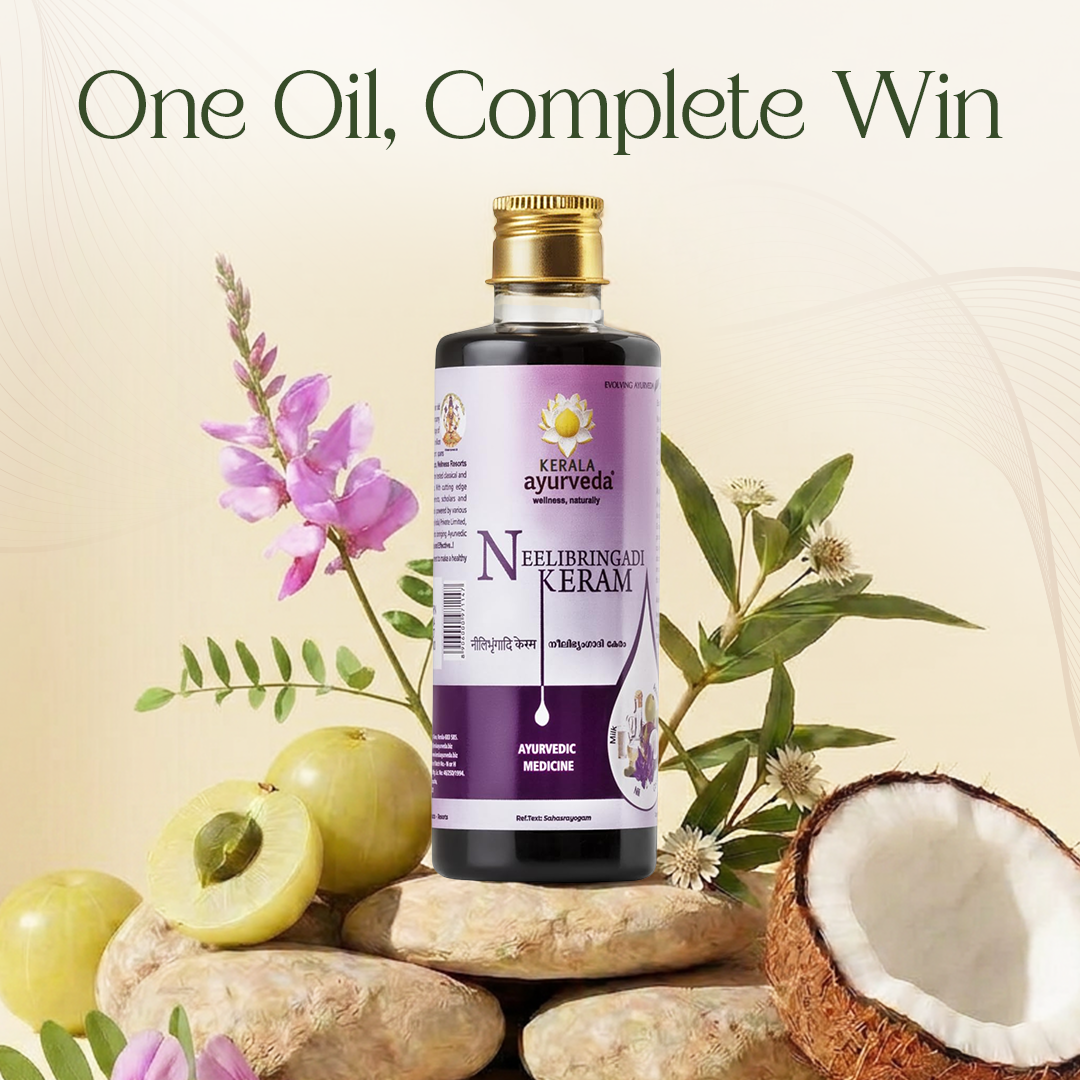
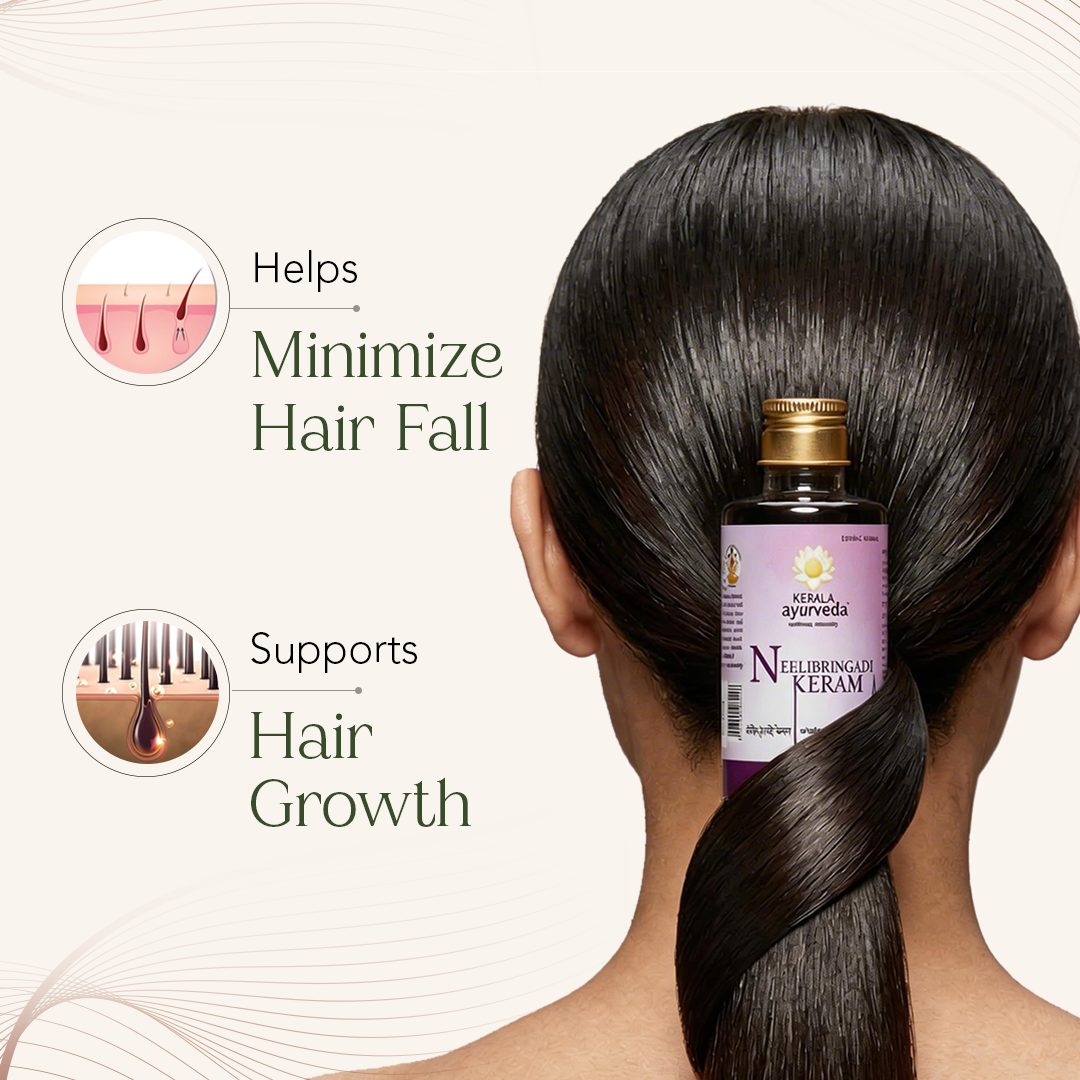
Neelibhringadi Keram is traditionally used in Ayurveda to cool excess Pitta, nourish the scalp, and support stronger, healthier-looking hair. Its Neeli content is especially valued for supporting natural hair colour and is traditionally used in care for premature greying. It can be a thoughtful part of a routine focused on reducing ongoing stressors and improving overall hair quality.
Explore Neelibhringadi Keram if you want to pair better sleep, steadier meals, and stress care with a simple weekly ritual for scalp support. If your greying is sudden, rapid, or accompanied by fatigue or weight changes, consider speaking with a qualified healthcare professional as well.
Need help choosing the right support?
Consult online with our Ayurvedic experts for personalized health guidance.
 Request Consultation


MORE FROM AYURVEDA
Related articles
Vata, Pitta, or Kapha: Are You Oiling Your Scalp the Wrong Way?
The blog explains how the right way to oil your scalp depends on your dosha and scalp condition. It explores how Vata, Pitta, and Kapha...
Too Many Hair Products, Too Little Clarity: Can One Ayurvedic Oil Like Neelibhringadi Keram Do More?
The blog explores why hair fall, frizz, dandruff, and premature greying may stem from interconnected scalp concerns, rather than requiring separate solutions. It brings together...
Your Kitchen Already Holds the Cure: Everyday Indian Foods That Fight Hair Fall
Healthy hair starts with consistent nourishment, and everyday Indian meals can provide many of the nutrients it needs. Dal, curd, eggs, leafy greens, nuts, and...
What is Ojas? How It Can Impact Your Health? - An Ayurvedic View
Ayurveda defines Ojas as ‘vigour’. It is the vital energy or core essence that nourishes all tissues and is responsible for the optimal functioning of...
Ayurveda Doshas: Guide to the Three Dosha Types
The Tridosha in Ayurveda (Vata, Pitta, Kapha) are energetic forces of nature, functional principles that help us better understand ourselves and the world. Vata, Pitta,...