














Key Takeaways
Mastering Neelibhringadi: Correct Application for Stronger, Healthier Hair
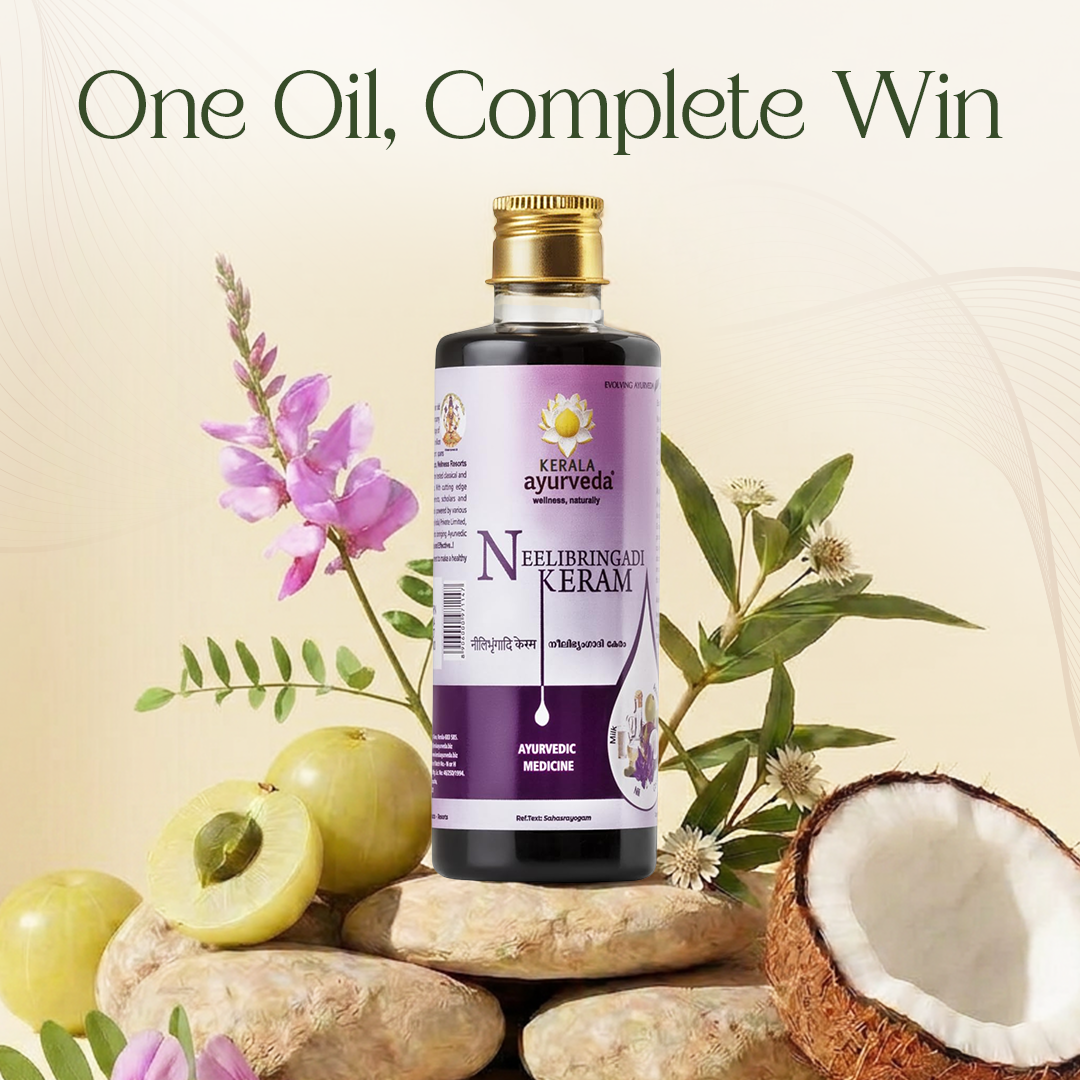
The method matters as much as the oil itself. A small amount applied directly to the scalp will do more than a generous pour that mostly coats the hair shaft. Here’s how to get it right.

Prep and Apply
Warm the oil lightly. Place the bottle in warm water for a few minutes. It should feel comfortably warm on your wrist, not hot.
Start with less than you think you need. About 1–2 teaspoons (5-10ml) works for short to medium hair. Go up to 2–3 teaspoons(10-15ml) for long or thick hair. If your scalp runs oily or your hair is fine, lean toward the lower end.
Section dry or slightly damp hair. Sit comfortably, part your hair in lines, and apply the oil directly to the exposed scalp using your fingertips. This is the step most people skip or rush, and it’s the one that matters most.
Massage with gentle pressure. Use small circular motions, moving from the front hairline toward the crown and down to the back of the head. Spend 5–10 minutes here. You want scalp movement, not vigorous rubbing. This helps spread the oil evenly and may support circulation around hair follicles.
Work the remainder through the lengths. Whatever’s left on your hands can go onto mid-lengths and ends, especially if your hair is dry, curly, or long. Don’t drench the strands.
Timing, Frequency, and Safety
Leave it on for the right window. About 30–60 minutes before washing is practical for most people.
Repeat consistently. Aim for 2–3 times per week, or a small daily amount if your scalp handles it. Consistency usually matters more than quantity when it comes to supporting healthier hair growth.
Watch for common mistakes. Avoid applying over broken or irritated skin. And speak with your healthcare provider if you are under treatment for any scalp condition. If your hair feels greasy or itchy after use, reduce the amount rather than stopping altogether.
That raises the real question: once you have the right method, what actually makes it work over time?
Did You Know?
"Extra oil on your hair doesn't mean better scalp care. Hair follicles sit in the scalp, not along the greasy hair strands."
Reviewed by Ayurvedic Experts

Dr. Shweta Netke
BAMS, 15+ years of experience.
Medical Writer
Dr. Shweta Vijay Netke is an Ayurveda Doctor and expert with over 15 years of experience in Ayurveda, wellness, and beauty. She writes to make the timeless wisdom of Ayurveda simple, practical, and relevant to modern lifestyles.


MORE FROM AYURVEDA
Related articles
Vata, Pitta, or Kapha: Are You Oiling Your Scalp the Wrong Way?
The blog explains how the right way to oil your scalp depends on your dosha and scalp condition. It explores how Vata, Pitta, and Kapha...
Why Young Adults Are Greying Earlier and What Ayurveda Says About It
Premature greying can involve genetics, stress, smoking, nutritional gaps, and thyroid-related issues. Ayurveda describes early greying as palitya and considers diet, digestion, lifestyle, and scalp...
Too Many Hair Products, Too Little Clarity: Can One Ayurvedic Oil Like Neelibhringadi Keram Do More?
The blog explores why hair fall, frizz, dandruff, and premature greying may stem from interconnected scalp concerns, rather than requiring separate solutions. It brings together...
Your Kitchen Already Holds the Cure: Everyday Indian Foods That Fight Hair Fall
Healthy hair starts with consistent nourishment, and everyday Indian meals can provide many of the nutrients it needs. Dal, curd, eggs, leafy greens, nuts, and...