














- 80+ Years of Heritage
Kerala Ayurveda has been a trusted name in authentic Ayurvedic healing for over 80 years, carrying forward the wisdom of Ayurveda while making it relevant to modern life. - A Full-Spectrum Ayurveda Organisation
Today, we serve over a million people across India and the US through wellness resorts, hospitals, clinics, academics, and manufacturing, all rooted in the timeless principles of Ayurveda’s 8,000-year-old science. - Knowledge Backed by Experience & Evidence
Our approach goes beyond classical Ayurvedic texts. We draw upon clinical experience, relevant research, and contemporary understanding to create responsible and practical health and wellness guidance. - Authenticity with Accessibility
We strive to make Ayurveda accessible and relevant to today’s consumers without compromising its authenticity or traditional foundations. - Safety First
Every recommendation is developed with safety as a priority, with potential contraindications and important precautions clearly communicated.
Key Takeaways
1. Frizz often starts with a damaged cuticle and poor moisture retention.
2. Conditioning and light oiling help keep dry lengths manageable.
3. Gentle washing and towel blotting reduce friction and roughness.
4. Limit heat styling and use heat protection when needed.
5. Consistent care and a silk or satin pillowcase help manage recurring frizz.
Introduction
If your mornings regularly end with frizzy hair, rough ends, and yet another failed attempt to smooth things down, you’re not alone. Hair frizz is one of the most common beauty complaints out there.
But here’s what most people miss: frizz usually has less to do with styling and more to do with moisture escaping from a damaged or lifted hair surface. Your hair isn’t misbehaving. It’s struggling to hold onto water.
Ayurveda frames this as excess Vata , a dry, rough quality in the body that can show up in hair too. In practical terms, that maps closely to a weakened cuticle, faster water loss, and poor moisture retention. The strand absorbs moisture unevenly, then can’t keep it sealed inside.
Once you see frizz as a barrier problem rather than a behavior problem, your routine becomes gentler and smarter. This article walks through the root causes of dry, frizzy hair, ten simple home remedies that actually restore and lock in moisture, and the daily habits that keep results from fading overnight. It starts with understanding what’s really going on at the surface of your hair.
Root Causes of Dry and Frizzy Hair
Everyday Triggers That Dry Out Hair
The outer layer of each strand, called the cuticle, is made of tiny overlapping scales, picture roof tiles of the house.When this surface stays smooth, hair reflects light, feels softer, and holds water evenly. When it’s dry or damaged, those scales lift. A rougher surface catches on nearby hairs, loses moisture faster, and lets humidity in unevenly.
Daily habits often kick off the cycle. Frequent washing, very hot water, rough towel drying, harsh shampoos, sun, wind, and pollution can strip the hair’s natural lipid, coating the thin fatty layer that helps keep strands water-resistant. Research on hair shaft damage shows that aggressive shampooing and friction increase tangling and frizz, especially once that protective surface becomes more porous.
In Ayurveda, this pattern is understood as excess dryness in the hair tissue, which is why regular oiling has traditionally been emphasized as prevention, not just rescue care.
Hair type plays a role too. Curly, coily, and wavy hair tends to dry out more easily because scalp oils have a harder time traveling down a bendy strand. Some people naturally produce less oil. Others inherit more porous hair, meaning their strands absorb water fast but can’t hold it well. Interestingly, two people can follow the exact same routine and get very different results.
Heat styling and chemical processing add another layer of stress. Flat irons, blow dryers, bleaching, coloring, and repeated smoothing treatments wear away the cuticle and damage the internal bonds that give hair its strength and shape. Once that happens, strands swell more when wet and break more easily during combing.
So the useful shift is this: stop treating frizz as “unruly” hair and start treating it as hair that has lost moisture and can’t seal it back in.
Reviewed by Ayurvedic Experts
Dr. Shweta Netke
BAMS, 15+ years of experience.
Medical Writer
Dr. Shweta Vijay Netke is an Ayurveda Doctor and expert with over 15 years of experience in Ayurveda, wellness, and beauty. She writes to make the timeless wisdom of Ayurveda simple, practical, and relevant to modern lifestyles.
10 Simple Home Remedies to Tame Frizz and Lock in Moisture
If frizz starts when hair can’t hold water, the first job is simple: add a little moisture, then seal it in. Oils help because they coat rough areas of the cuticle. Some, especially coconut oil also penetrate into the hair shaft and reduce protein loss. Oils help lock in moisture, while masks replenish hydration and rinses can help smooth the hair cuticle. Used together, they offer a simple way to manage frizz beyond temporary styling fixes.
Here are a few simple ways to manage frizz more effectively:
- Use coconut based oils as a pre-wash treatment.
Apply a small amount of coconut based oils like Neelibhringadi Keram to the mid-lengths and end for 30–60 minutes before shampooing. This can help reduce protein loss and protect dry or damaged strands before cleansing. - Seal moisture with a lightweight oil after washing.
After your hair is dry or slightly damp, use just 1–2 drops of light textured oils like sweet almond or Amla infused oil on the ends to help lock in moisture and smooth flyaways without weighing the hair down. - Hydrate with a water-based leave-in product with aloe vera.
Apply a small amount of fresh aloe vera gel to damp hair to boost hydration and improve softness and avoid damage. - Try a yogurt-and-honey hair mask.
Mix 2 tablespoons of plain yogurt with 1 teaspoon of honey and apply it to damp hair for about 15 minutes. Rinse thoroughly for added softness and manageability. - Detangle gently before washing.
Use a wide-tooth comb or your fingers to remove knots before shampooing. This helps reduce breakage and prevents frizz caused by rough handling in the shower. - Dry your hair without rubbing it.
Avoid vigorous towel-drying, which creates friction and frizz. Instead, gently squeeze out excess water and blot with a soft cotton T-shirt or microfiber towel. - Distribute products mainly through mid-lengths and ends.
Focus hydration and styling products away from the roots to avoid buildup and keep the hair looking smooth and balanced. - Use a heat protectant before heat styling.Apply a heat protectant spray or serum to damp hair before blow-drying, straightening, or curling to reduce damage and frizz caused by high temperatures.
- Rinse with cool water at the end of your wash.
A final cool rinse can help flatten the hair cuticle, making strands appear smoother and reducing frizz as the hair dries. - Sleep on a silk or satin pillowcase.
Switching to a silk or satin pillowcase reduces friction while you sleep, helping prevent frizz, tangles, and breakage overnight
With steady use, these remedies can leave hair noticeably smoother and less frizzy. But to make those results stick, your everyday habits matter just as much.
Did You Know?
" Humidity makes everything obvious, dry hair pulls water from the air, swells unevenly, and the raised cuticle creates that fluffy, expanded look we call frizz."
Daily Hair Care Habits to Prevent Frizz from Returning
Wash-Day Habits
Once a mask or oil has added moisture, your routine needs to protect it. The simplest place to start is wash day.
Use lukewarm water not hot so the hair surface is less likely to roughen and lose its natural lipid layer. Cleanse with a gentle sulfate-free wash, or use shampoo only on the scalp if your lengths tend to be dry. Strong detergents and alcohol-heavy styling products can strip hydration, especially with frequent washing. For most people, two to three washes a week is a reasonable middle ground, with natural conditioner every wash and extra focus on mid-lengths and ends. If your scalp gets oily faster, adjust but the goal stays the same: clean without over-stripping.
The best approach to reducing frizz is often consistency with gentler habits, not frequent resets.
Nighttime and Everyday Protection
Night care matters more than most people realize.
A silk or satin pillowcase with a loose braid or low plait helps reduce tangling and breakage. Keep protective styles soft, especially at night. Tight styles pull at the shaft and can make frayed ends look worse.
Regular trims help with long-term frizz control too. Removing split, feathered ends prevents roughness from spreading upward along the strand.
During the day, handle your hair less. Constant touching, twisting, or dry brushing repeatedly disrupts your hair's natural pattern, lifts the protective outer cuticle, and introduces friction making frizz expand instantly. Use a wide-tooth comb on damp, conditioned hair rather than dry brushing repeatedly, which lifts the cuticle and expands frizz.
This is where prevention becomes genuinely practical. When your daily habits stop stripping moisture and start protecting it, frizz becomes less of a morning battle and more of a manageable pattern.
Bring Frizz Back Under Control Naturally
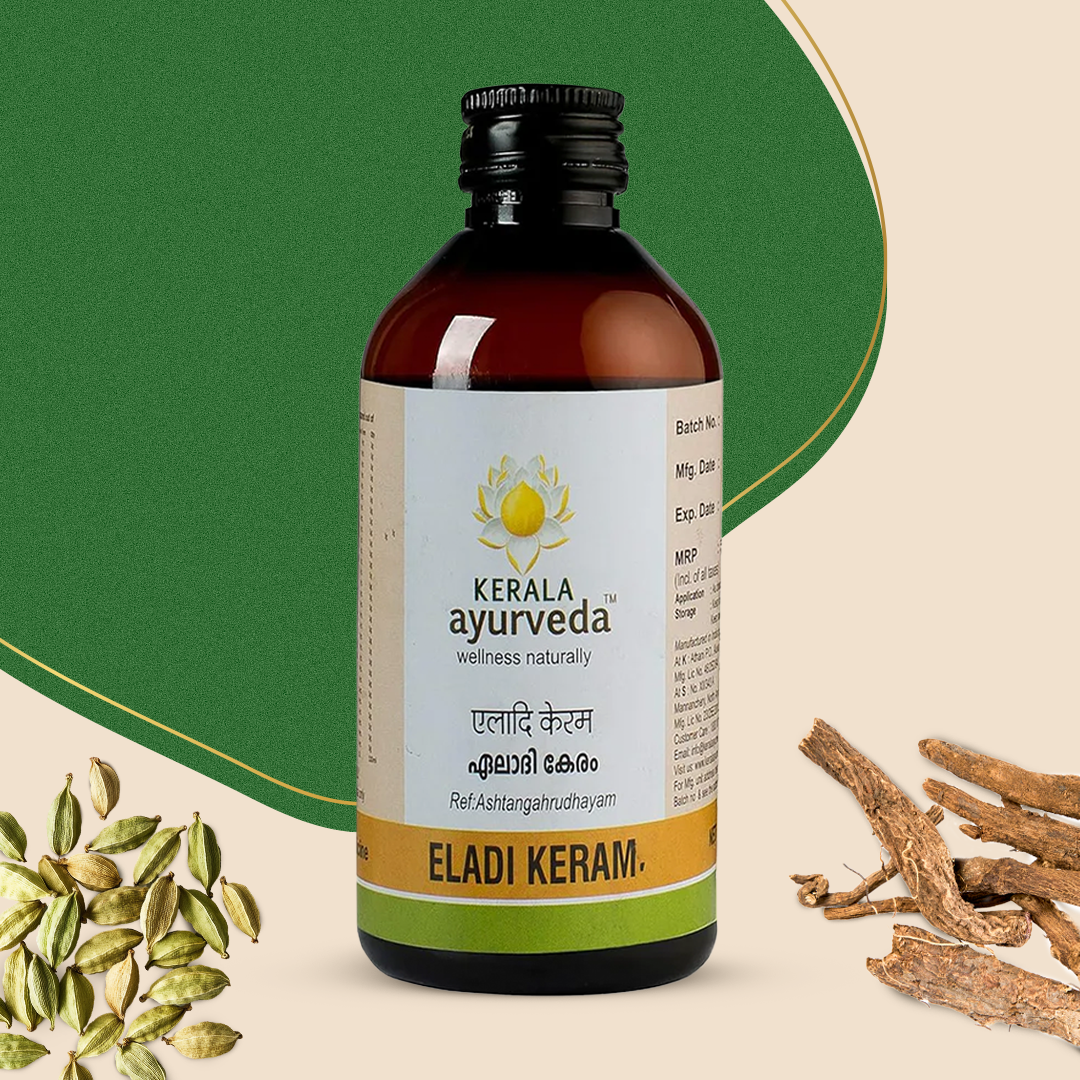
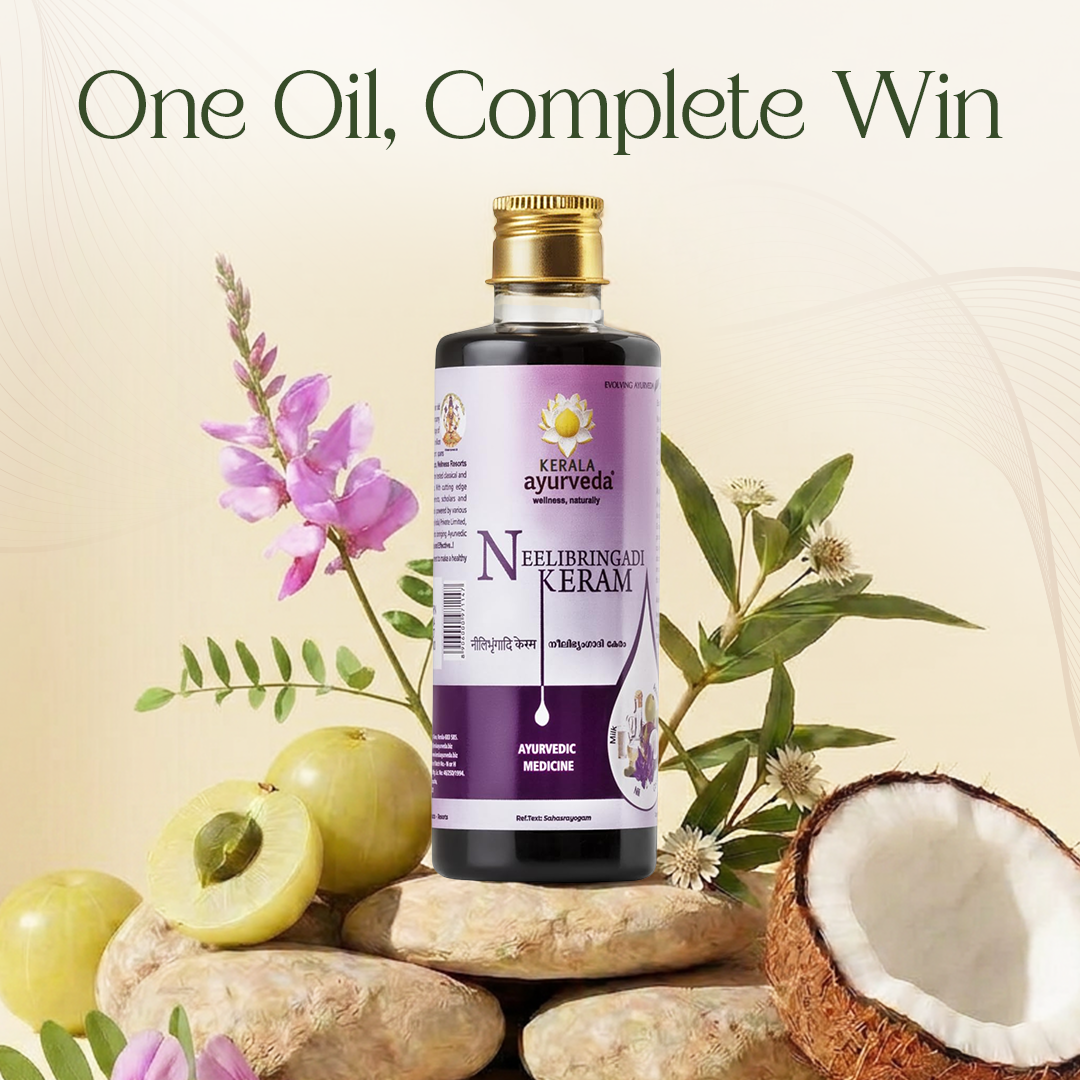
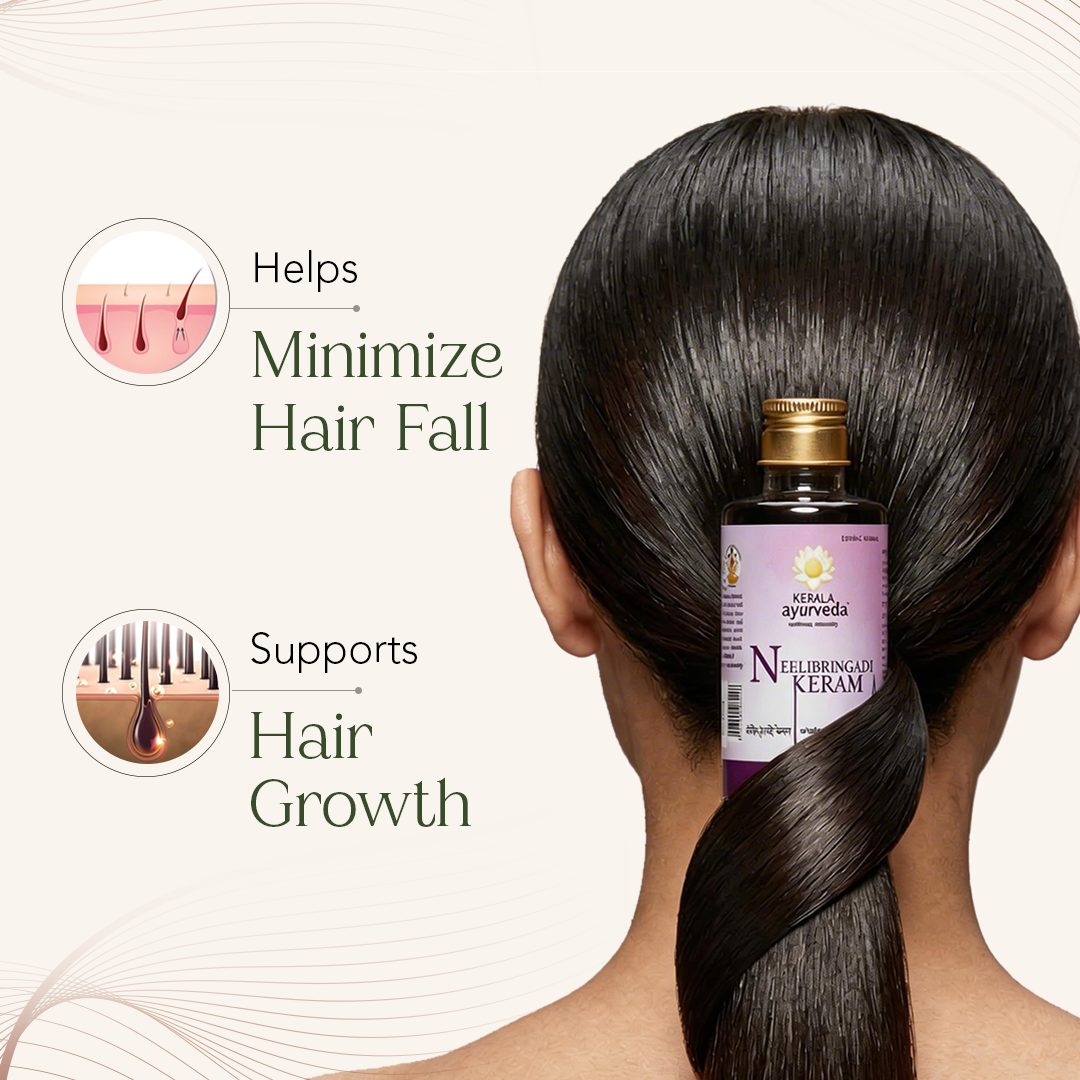
If dryness and rough texture keep coming back, a nourishing Ayurvedic hair oil can help support the moisture-sealing routine explained above. Neelibhringadi Keram is traditionally used to calm dry, frizz-prone hair, soften the lengths, and support a smoother-looking finish when applied regularly.
Use the oil on the scalp and through the ends before washing, or smooth a few drops over damp mid-lengths as a light sealing step. Pairing gentle wash habits with consistent oiling often makes the biggest difference over time.
Explore Neelibhringadi Keram if you want a simple, traditional addition to your anti-frizz routine.


MORE FROM AYURVEDA
Related articles
Vata, Pitta, or Kapha: Are You Oiling Your Scalp the Wrong Way?
The blog explains how the right way to oil your scalp depends on your dosha and scalp condition. It explores how Vata, Pitta, and Kapha...
A Step-by-Step Neelibhringadi Routine for Stronger, Healthier-Looking Hair
Neelibhringadi oiling works best as a gentle, consistent routine using an amount suited to the scalp. Sectioning the hair and applying oil directly to the...
Why Young Adults Are Greying Earlier and What Ayurveda Says About It
Premature greying can involve genetics, stress, smoking, nutritional gaps, and thyroid-related issues. Ayurveda describes early greying as palitya and considers diet, digestion, lifestyle, and scalp...
Too Many Hair Products, Too Little Clarity: Can One Ayurvedic Oil Like Neelibhringadi Keram Do More?
The blog explores why hair fall, frizz, dandruff, and premature greying may stem from interconnected scalp concerns, rather than requiring separate solutions. It brings together...
Your Kitchen Already Holds the Cure: Everyday Indian Foods That Fight Hair Fall
Healthy hair starts with consistent nourishment, and everyday Indian meals can provide many of the nutrients it needs. Dal, curd, eggs, leafy greens, nuts, and...