




























Key Takeaways
1. Increased hair fall can involve stress, nutrient gaps, hormones, or scalp conditions.
2. Tight hairstyles, rough handling, and frequent heat can add breakage.
3. Regular meals with enough protein and iron support hair health.
4. Gentle washing, light oiling, and consistent sleep support daily care.
5. Persistent, sudden, or patchy hair loss needs professional assessment.
Introduction
Most hair fall advice starts with products. But if your drain is suddenly full of strands, the real issue is often not your shampoo. Increasing shedding is usually your body asking for attention from a cluster of everyday triggers like stress, low iron or protein, hormonal shifts, scalp irritation, or rough hair handling rather than one cause.
Ayurveda understands this well. In Khalitya, rising Pitta and Vata can weaken the scalp environment and the nourishment reaching hair roots. When the body is overheated, undernourished, stressed, or depleted, hair often shows it early.
So before chasing a miracle hair fall solution, it helps to ask a better question: what changed? This article walks through what increasing hair fall may be signaling, the everyday habits making it worse, small daily adjustments that actually help, and when it’s time to see a professional.
Reviewed by Ayurvedic Experts

Dr. Shweta Netke
BAMS, 15+ years of experience.
Medical Writer
Dr. Shweta Vijay Netke is an Ayurveda Doctor and expert with over 15 years of experience in Ayurveda, wellness, and beauty. She writes to make the timeless wisdom of Ayurveda simple, practical, and relevant to modern lifestyles.
What Your Increasing Hair Fall Could Be Signaling About Your Health
Common Health Signals Behind Hair Fall
Some shedding is normal. Most people lose about 50 to 100 hairs a day as part of the usual growth cycle. Concern starts when you notice a clear change from your baseline: more strands on the pillow, extra hair in the shower, a widening part line, or shedding that continues for weeks.
At that point, hair fall is less a single problem and more a body signal. Common contributors include iron deficiency or anemia, low vitamin D, insufficient protein intake, thyroid imbalance, recent illness, and stress. High stress hormones can push more follicles into the resting phase at once so weeks later, more hairs shed together in a wave. Hormonal shifts after pregnancy, around menopause, or with androgen-related changes can also shorten the growth phase or thin the hair shaft.
Scalp conditions matter too. Ongoing dandruff, itching, inflammation, or fungal infection can disturb the follicle environment and increase both breakage and shedding.
The Ayurvedic Lens
In Ayurveda, gradual hair loss falls under Khalitya, where Pitta and Vata imbalance often lead the process. Pitta can overheat the scalp and hair roots, while Vata can weaken nourishment and increase shedding. Classical texts also note that Kapha may later obstruct healthy regrowth at the follicle opening.
Put simply, the scalp may become too hot, too dry, too inflamed, or too clogged for stable growth. This is why attempts to stop hair fall immediately often disappoint. A lasting solution usually comes from finding the cluster of small triggers behind it. Once you see hair fall this way, the daily habits feeding the problem become much easier to spot and correct.
Did You Know?
"Stress-related hair shedding often starts two to three months after the stressful period, making the real trigger easy to miss."
Everyday Habits That Are Unknowingly Worsening Your Hair Fall
One common myth is that hair fall is mainly about choosing the “right” shampoo. In reality, daily handling often does more damage than the bottle does.
Tight ponytails, buns, braids, extensions, and repeated re-tightening create traction stress constant pulling at the hair follicle opening. Over time, that tension can increase shedding and breakage, especially around the hairline and parting. Rough brushing adds another layer.
Even washing habits matter. Very harsh cleansers, frequent washing with hot water, or scrubbing the scalp aggressively can strip the skin barrier and irritate the roots. Under-washing, on the other hand, can allow sweat, oil, and scale to build up.Wet hair stretches more easily, so forceful detangling, vigorous towel rubbing, or sleeping with wet hair can fray the cuticle and snap strands before they finish their growth cycle. Frequent straightening, curling, blow-drying, coloring, relaxing, or chemical smoothing weakens the hair shaft by stripping its protective oils and disturbing its protein structure.
In Ayurvedic terms, this repeated friction and dryness aggravates Vata, while excess heat from styling tools aggravates Pitta. A scalp that is repeatedly pulled, overheated, or irritated is simply a less stable place for strong hair growth. Ayurveda also recognizes Shoka and Shrama as factors that disturb scalp health.
Hair also reflects what your routine is doing inside the body. Skipped meals, crash dieting, low protein intake, and poor iron-rich food intake can reduce the raw materials needed to build strong hair. Add poor sleep and chronic stress, and the picture shifts further. Stress can push more follicles into the resting phase. Once you notice these hidden triggers, the next step becomes much clearer: small daily changes are often the most practical hair fall solution.
Small Daily Adjustments to Regain Control Over Hair Fall
Once you’ve spotted the habits adding to shedding, the most useful approach is a repeatable routine. Start by tightening the basics rather than chasing an overnight fix.
- Audit one week of patterns. Note skipped meals, low-protein days, heavy stress, poor sleep, tight hairstyles, and heat styling. In Ayurveda, this helps identify whether Vata or Pitta is dominating your scalp pattern.
- Build meals around nourishment. Eat enough and eat regularly. Add protein to each meal. Hair shafts are literally built from protein. Include iron-rich foods several times a week, such as lentils, raisins, leafy greens, or eggs. Pair plant iron with vitamin C so your gut absorbs more. Nuts, seeds, and healthy fats support scalp comfort and reduce dryness.
- Wash gently, not aggressively. Cleanse the scalp with lukewarm water and a mild herbal cleanser suited to your scalp type. Hot water and hard scrubbing can disturb the scalp barrier and increase irritation. Detangle softly preferably before washing and avoid rough handling when hair is wet because stretched strands snap more easily.
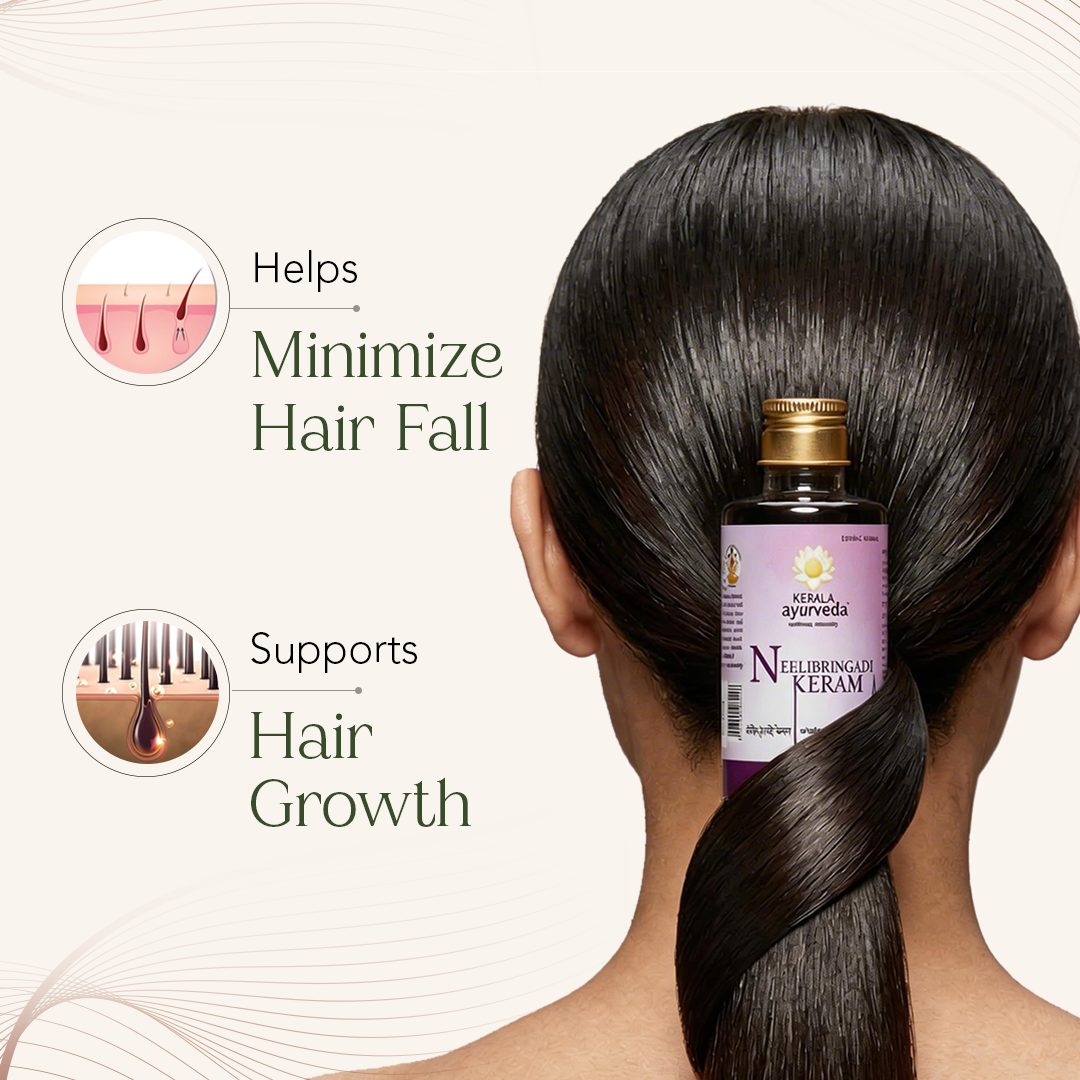
- Use scalp oiling carefully. A light Shiroabhyanga with Bhringraj or coconut-based oil like Neelibhringadi Keram may support comfort and circulation. Use a small amount about 5-10 ml massage 3-5 mins with fingertips, then wash out after 30-60 mins.
- Lower your stress load daily. Classical Ayurveda texts link grief, overwork, and anger with hair disturbance, and modern evidence supports stress reduction for hair health. Even 10 minutes of breathing practice, meditation, yoga, or a brisk walk can help. These habits may calm the stress signaling that pushes more follicles into resting and shedding phases.
Stay consistent for several weeks. That steady approach is usually how lasting improvement happens. But if consistent changes don’t slow persistent shedding, the next step is professional evaluation.
When to Seek Professional Help for Persistent Hair Fall
If you’ve followed those daily adjustments consistently for six to eight weeks and shedding is still the same or worse self-care has likely reached its limit.
Seek professional help sooner if hair loss is sudden, patchy, rapidly worsening, or paired with scalp redness, scaling, pain, intense itching, or a receding frontal hairline.These patterns can point to causes that need targeted assessment: fungal infection, alopecia areata, thyroid-related shedding, nutritional deficiency, or early scarring conditions where delay may risk permanent follicle damage.
Ayurveda also distinguishes Khalitya from Indralupta, which is useful because the pattern itself gives clues about what’s happening underneath.
What an Evaluation Typically Includes
Common lab work may include a complete blood count, iron status, thyroid function, and sometimes vitamin or autoimmune screening. Patchy loss with scaling may need fungal testing, and unclear or scar-like cases may need a scalp biopsy.
An experienced Ayurvedic Vaidya can add pattern-based assessment of Pitta and Vata, along with digestion, sleep, and routine factors that may be sustaining the problem.
Most importantly, persistent hair fall deserves an Ayurvedic Vaidya diagnosis rather than guesswork. Knowing when to escalate is part of a smart strategy, and it sets up the next step with more precision than trying to figure things out on your own.


MORE FROM AYURVEDA
Related articles
Hair Fall in Monsoon: Why It Happens and How to Prevent It
Monsoon hair fall can appear worse when humidity, scalp buildup, and wet-hair breakage add to normal shedding. The blog emphasises regular cleansing, thorough drying, gentle...
From Dull to Shiny: Natural Ways to Transform Dry Hair at Home
Hair looks dull when moisture loss, cuticle damage, heat, friction, or buildup disrupt its smooth surface. The blog highlights gentle oiling, conditioning, careful handling, and...
Post-Delivery Hair Fall: How to Stop It Without Harsh Treatments
Postpartum hair fall is usually temporary shedding caused by hormonal changes after childbirth. The blog emphasises gentle handling, mild scalp oiling, balanced nourishment, hydration, and...
Hair Care for Men: The Everyday Routine for Healthier Hair
A simple, consistent routine supports men’s hair health through scalp-appropriate cleansing, gentle oiling, conditioning, and careful styling. The blog combines these habits with Ayurveda’s emphasis...
How to Regrow Hair Naturally: What Actually Works and What Doesn’t?
Hair regrowth takes months and depends on the hair cycle, nutrition, hormones, and overall health. The blog highlights gentle Ayurvedic oiling, balanced meals, regular sleep,...
Why Hair Growth Takes Months and What Progress Really Looks Like
Visible hair regrowth takes months because follicles move through growth, transition, and resting phases. Reduced shedding, less breakage, and improved scalp comfort may appear before...
Reasons for Hair Fall in Women and How to Control It
Hair fall in women can involve hormonal changes, heredity, nutritional gaps, stress, thyroid issues, and scalp conditions. The pattern of loss can offer clues, but...