











Key Takeaways
Did You Know?
"Postpartum hair fall often looks sudden only because many hairs that would have shed gradually during pregnancy were temporarily ‘held’ and then released in a more synchronized wave after delivery."
Understanding Postpartum Hair Fall: Why It Happens After Delivery
If you’re seeing clumps in the shower or extra strands on your pillow, here’s the most important reframe: postpartum shedding usually reflects a temporary hair-cycle reset, not permanent damage or “weak hair.”
What’s Actually Happening in the Follicle
During pregnancy, higher hormone levels keep more follicles in the Anagen phase, so fewer hairs shed than usual. You might even notice thicker-looking hair during those months. After delivery, progesterone and estrogen fall sharply, and prolactin shifts with breastfeeding can also influence the follicle.
Many of those “held” hairs then move together through catagen and into telogen before they shed. That’s why hair fall after delivery often feels sudden and dramatic. It's not that more hair is dying, it’s that a backlog is released at once.
In modern terms, this is called telogen effluvium: a diffuse shedding pattern that appears after a body stressor such as childbirth.The follicle isn’t dead. It’s changing its timing.
Ayurveda describes the postpartum period as a time of depletion, when the body is recovering from the physical strain of pregnancy, labor, blood loss, and major hormonal shifts. This phase is traditionally associated with an increase in Vata, which is linked with dryness, weakness, irregularity, and reduced nourishment of the tissues and can show up as dry skin, disturbed sleep, fatigue, and increased hair shedding. The focus is therefore on restoring nourishment, warmth, rest, regular meals, and gentle routines rather than aggressively treating the hair alone.
The Timeline and What Influences It
Hair loss after delivery usually starts around two to four months postpartum, often peaks near the fifth month, and commonly settles over the following few months. Many women notice improvement by six to twelve months. It doesn’t affect every mother the same way some barely notice it, while others see heavy shedding during washing or combing.

What can make it feel worse? Stress, fragmented sleep, and the general demands of new motherhood. Follicles are sensitive to whole-body strain. Blood loss during delivery may add to the problem by reducing iron stores and slowing the body’s rebuilding work.
Classical Ayurvedic texts emphasize that after birth, the mother has undergone exhaustion from fetal growth, labor pain, and loss of blood and fluids so careful nourishment and rest matter deeply. Hair is traditionally considered a Mala of Asthi Dhatu , so its quality is seen as reflecting deeper tissue nourishment. Supporting Agni with warm, nourishing, easy-to-digest foods is therefore emphasized to gradually rebuild the Dhatus and support overall recovery, including hair health.
This is also why harsh fixes rarely help. Once you understand that increased postpartum shedding is usually a temporary cycle reset, the goal shifts from panic to gentle support. And that’s exactly where scalp and hair recovery tips become useful.
Reviewed by Ayurvedic Experts

Dr. Shweta Netke
BAMS, 15+ years of experience.
Medical Writer
Dr. Shweta Vijay Netke is an Ayurveda Doctor and expert with over 15 years of experience in Ayurveda, wellness, and beauty. She writes to make the timeless wisdom of Ayurveda simple, practical, and relevant to modern lifestyles.
Nutrition, Rest, and Ayurvedic Remedies for Postpartum Hair Regrowth

Rebuilding From Within
Gentle scalp care protects what you have, but regrowth depends on rebuilding from within. Hair follicles are fast-turnover tissues, so when the postpartum body is short on protein, iron, zinc, vitamin D, B12, or folate, recovery can slow and shedding can feel more prolonged. Blood loss, breastfeeding demands, irregular meals, and low appetite can all contribute.
In Ayurvedic terms, this is a period of depleted Dhatus, so classics emphasize warm, digestible, nourishing food rather than restrictive eating. Think soft cooked meals, moong dal, well-cooked grains, 1-2 tsps ghee, dates, sesame, soaked almonds, milk, and iron-rich foods like leafy greens, lentils, sesame seeds, dates, raisins, beans, and jaggery suited to your digestion.
Hydration matters too. Low fluid intake can worsen fatigue, dryness, and headaches, while adequate fluids support milk production and circulation. In classical Sutika Paricharya, the diet is kept warm, light, and easy to digest to support weakened Agni. Thin gruels such as Yavagu or Manda are introduced first, followed gradually by more nourishing, strengthening foods like khichadi as digestion improves. Cold, raw, heavy, and stale foods are generally avoided during this recovery phase.
Rest Is Not Optional
Rest is not a luxury here. It’s part of hair recovery. It is understandable with the baby in tow that sleep is scarce however lack of sleep and ongoing stress can keep the body in a “survival first” mode, where repair gets deprioritized and more hairs shift into shedding. That doesn’t mean stress alone causes hair loss after delivery, but it can amplify the cycle already underway.
In practical terms: protect short rest windows, accept help with meals or baby care, and use simple calming routines that lower nervous-system load.
“Postpartum regrowth usually responds better to steady nourishment and sleep support than to any quick-fix hair remedy.” - Dr. Harsha says.
Postpartum hair recovery takes patience and gentle, consistent care. Balanced meals, rest whenever possible, and a simple hair-care routine can support recovery as the shedding cycle settles. There is no need to rush the process. If hair loss becomes unusually heavy, prolonged, or patchy, consult an Ayurveda Vaidya to help assess the cause and guide the next steps.
Need help choosing the right support?
Consult online with our Ayurvedic experts for personalized health guidance.
 Request Consultation


MORE FROM AYURVEDA
Related articles
Hair Care for Men: The Everyday Routine for Healthier Hair
A simple, consistent routine supports men’s hair health through scalp-appropriate cleansing, gentle oiling, conditioning, and careful styling. The blog combines these habits with Ayurveda’s emphasis...
How to Regrow Hair Naturally: What Actually Works and What Doesn’t?
Hair regrowth takes months and depends on the hair cycle, nutrition, hormones, and overall health. The blog highlights gentle Ayurvedic oiling, balanced meals, regular sleep,...
Why Hair Growth Takes Months and What Progress Really Looks Like
Visible hair regrowth takes months because follicles move through growth, transition, and resting phases. Reduced shedding, less breakage, and improved scalp comfort may appear before...
Reasons for Hair Fall in Women and How to Control It
Hair fall in women can involve hormonal changes, heredity, nutritional gaps, stress, thyroid issues, and scalp conditions. The pattern of loss can offer clues, but...
Split Ends Won’t Fix Themselves, But Here’s How to Manage Them Naturally
Managing split ends starts with trimming damaged tips and protecting hair from further wear. Gentle detangling, conditioning, light oiling, and reduced heat and friction help...
A Step-by-Step Neelibhringadi Routine for Stronger, Healthier-Looking Hair
Neelibhringadi oiling works best as a gentle, consistent routine using an amount suited to the scalp. Sectioning the hair and applying oil directly to the...
Vata, Pitta, or Kapha: Are You Oiling Your Scalp the Wrong Way?
The blog explains how the right way to oil your scalp depends on your dosha and scalp condition. It explores how Vata, Pitta, and Kapha...
Why Young Adults Are Greying Earlier and What Ayurveda Says About It
Premature greying can involve genetics, stress, smoking, nutritional gaps, and thyroid-related issues. Ayurveda describes early greying as palitya and considers diet, digestion, lifestyle, and scalp...
Taming Frizz Naturally: 10 Simple Home Fixes That Last
Frizz often develops when a rough or damaged hair cuticle struggles to retain moisture and responds unevenly to humidity. Ayurveda associates this dryness with Vata....
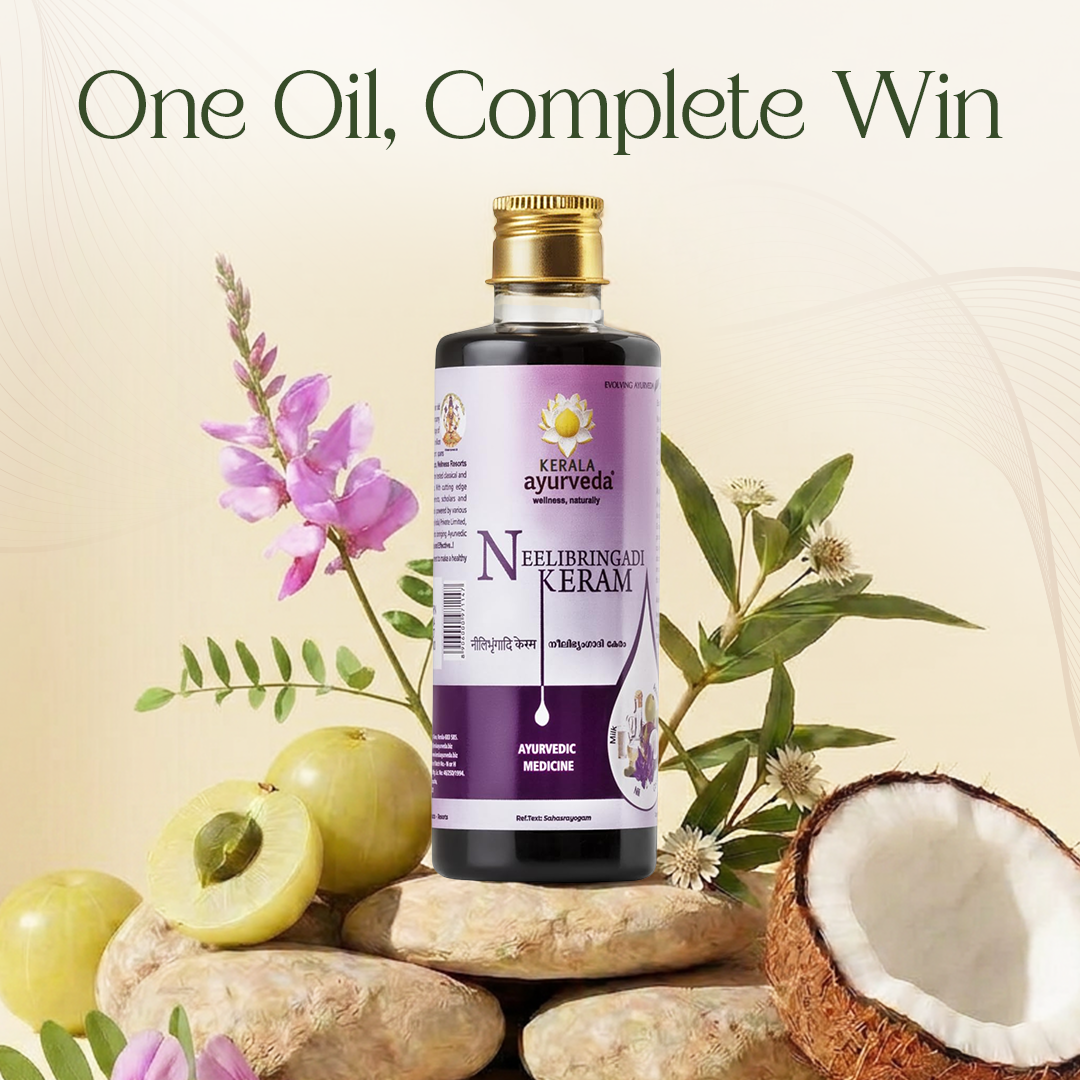
Too Many Hair Products, Too Little Clarity: Can One Ayurvedic Oil Like Neelibhringadi Keram Do More?
The blog explores why hair fall, frizz, dandruff, and premature greying may stem from interconnected scalp concerns, rather than requiring separate solutions. It brings together...
Your Kitchen Already Holds the Cure: Everyday Indian Foods That Fight Hair Fall
Healthy hair starts with consistent nourishment, and everyday Indian meals can provide many of the nutrients it needs. Dal, curd, eggs, leafy greens, nuts, and...