











- 80+ Years of Heritage
Kerala Ayurveda has been a trusted name in authentic Ayurvedic healing for over 80 years, carrying forward the wisdom of Ayurveda while making it relevant to modern life. - A Full-Spectrum Ayurveda Organisation
Today, we serve over a million people across India and the US through wellness resorts, hospitals, clinics, academics, and manufacturing, all rooted in the timeless principles of Ayurveda’s 8,000-year-old science. - Knowledge Backed by Experience & Evidence
Our approach goes beyond classical Ayurvedic texts. We draw upon clinical experience, relevant research, and contemporary understanding to create responsible and practical health and wellness guidance. - Authenticity with Accessibility
We strive to make Ayurveda accessible and relevant to today’s consumers without compromising its authenticity or traditional foundations. - Safety First
Every recommendation is developed with safety as a priority, with potential contraindications and important precautions clearly communicated.
Key Takeaways
1. Hair fall in women can involve hormones, heredity, nutrient gaps, and stress.
2. The pattern and speed of hair loss can help identify possible causes.
3. Ayurveda emphasises nourishment, digestion, and consistent daily habits.
4. Gentle oiling and reduced heat, friction, and tight styling support hair care.
5. Rapid, patchy, or painful hair loss needs professional assessment.
Introduction
Many women assume hair fall is just a shampoo, oil, or scalp problem. But research and clinical practice show that shedding often starts deeper with hormone shifts, thyroid changes, low iron, stress, poor sleep, or undernourishment that disrupt the hair growth cycle.
Uncovering the hidden causes of hair loss in women means looking beyond the strands and asking what your body is signaling.
Ayurveda teaches the same root-cause view. When Vata and Pitta become disturbed, and Agni is inconsistent, the scalp and follicles may receive weaker nourishment. That’s why hair fall is so often a body message, not just a beauty frustration.
If you’ve felt alarmed by extra hair in the shower or a widening part, the real question isn’t “Which product should I try?” but “Why is this happening now?” Often, the pattern of shedding itself offers the first clue.
Uncovering the Hidden Causes of Hair Loss in Women
Hair fall is rarely just a surface problem. In both modern dermatology and Ayurveda, visible shedding often reflects deeper imbalance rather than a shampoo issue alone.
Hormones and Heredity
Common reasons for hair fall in women include hormonal shifts from PCOS, pregnancy, postpartum recovery, perimenopause, and menopause. Thyroid underactivity or overactivity can also push more hairs out of the growth phase into the shedding phase which is why diffuse thinning sometimes appears “sudden.”
If you’ve wondered which hormone causes hair loss in females, the answer isn’t just one. Androgens such as DHT can shrink susceptible follicles, while falling estrogen and disturbed thyroid hormones can shorten the hair cycle. Ayurveda describes this as a disturbance of Pitta and Vata, especially when tissue nourishment is weak.
Family history matters too. Some women inherit follicles that are simply more sensitive to hormonal shifts, so age-related thinning may become obvious after stress, childbirth, or menopause rather than starting from nowhere.
Nutrition, Stress, and Overlooked Triggers
Hormones are only part of the picture. Low iron, low protein intake, restrictive dieting, poor digestion, and deficiencies in nutrients needed for oxygen delivery and keratin building can quietly reduce hair strength and regrowth.
Ongoing stress and poor sleep raise internal strain and alter the hair cycle. In Ayurvedic terms, they disturb Agni and Rasa Dhatu, so the scalp gets less consistent nourishment. Some medicines can also increase shedding one of the often-missed hair fall reasons in female patients.
Scalp imbalance matters as well. Excessive oiling, no oiling, scaling, inflammation, or persistent itching may signal a local problem on top of an internal one.
Seek medical evaluation if hair loss is rapid, patchy, associated with fatigue, menstrual changes, weight shifts, or scalp pain, or if you notice widening of the part despite good care. Once you know hidden triggers exist, the next step is learning what your shedding pattern is trying to tell you.
Did You Know?
"In female pattern hair loss, the problem is often not unusually high hormones but follicles that are unusually sensitive to normal hormone levels."
Decoding Hair Loss Patterns: What Your Scalp Is Signaling
Once you know the common triggers, the next step is reading the pattern because where and how you lose hair hints at what’s driving it underneath.
Diffuse Thinning
Diffuse thinning means hair density drops across a broad area, especially the top and crown. In women, that pattern often points toward female pattern hair loss, where follicles gradually shrink and each new hair grows back finer. A widening part and see-through crown fit this picture more than a sharply receding hairline.
If you do notice recession at the temples or front, it deserves closer attention. A true receding hairline is less typical in women and can reflect traction from tight hairstyles, hormonal sensitivity, or another cause rather than simple temporary shedding.
Diffuse thinning can also follow metabolic strain: low iron, low protein intake, thyroid imbalance, postpartum change, illness, or severe stress can push more hairs into the resting phase, so shedding increases two to three months later.
In practical terms, the location and speed matter. Slow crown thinning suggests ongoing follicle miniaturization. Sudden all-over shedding suggests the body has been under internal strain.
Patchy Loss
Patchy loss sends a different signal entirely. One or more smooth, round bald patches can suggest alopecia areata, where the immune system mistakenly targets growing follicles. You may also see short “exclamation mark” hairs at the edge, or nail pitting.
Ayurveda’s description of Indralupta similarly links hair fall to disturbed Pitta and Vata, followed by blockage at the follicle opening that slows regrowth.
But patchy loss with scaling, redness, broken hairs, pain, or a boggy inflamed area may point to infection or inflammatory scalp disease instead. See an Ayurveda Vaidya promptly if hair loss is rapid, patchy, scar-like, or paired with itching, redness, scalp tenderness, or eyebrow and eyelash loss.
That pattern-reading matters because your scalp isn’t just showing loss. It’s hinting at the deeper imbalance underneath which is exactly where the doshas help make sense of the picture.
Reviewed by Ayurvedic Experts
Dr. Shweta Netke
BAMS, 15+ years of experience.
Medical Writer
Dr. Shweta Vijay Netke is an Ayurveda Doctor and expert with over 15 years of experience in Ayurveda, wellness, and beauty. She writes to make the timeless wisdom of Ayurveda simple, practical, and relevant to modern lifestyles.
Ayurvedic Wisdom on Hair Fall: Balancing Vata, Pitta, and Nourishment
Once you read the shedding pattern, Ayurveda asks a deeper question: what is failing underneath the scalp?
Hair is considered an Upadhatu of Asthi (a secondary tissue linked with bone metabolism), so it reflects long-term nourishment, not just surface care. This is worth sitting with for a moment. It means your hair quality today is really a record of how well your body has been nourished over months, not weeks.
When Vata Rises
When Vata rises, the scalp loses lubrication, circulation becomes irregular, and strands turn rough, brittle, and easier to snap or shed. Classical descriptions of dry, cracked, itchy scalp also link this state to disturbed Vata.
In daily life, this often follows erratic meals, overwork, worry, frequent travel, late nights, or excessive fasting. Honestly, it’s a pattern most busy women will recognize.
When Pitta Dominates
Pitta creates a different pattern. Texts describe Pitta with Vata at the hair roots as a driver of hair fall, while heat from anger, grief, strain, and overexertion moving upward can damage hair quality. Practically, that can look like burning, tenderness, early thinning, excess scalp heat, or faster shedding during hormonally intense phases.
The Agni Connection
Here’s the layer that explains many hair fall reasons in female health: weak Agni. If digestion is inconsistent, food isn’t fully transformed into stable tissue nourishment, so the scalp receives less of what it needs to build strong shafts and support regrowth.
This is why hair can suffer even when you’re “eating healthy” on paper. If your body can’t break down and absorb those nutrients efficiently, the raw materials never reach the follicle.
Nourishment-First Approach
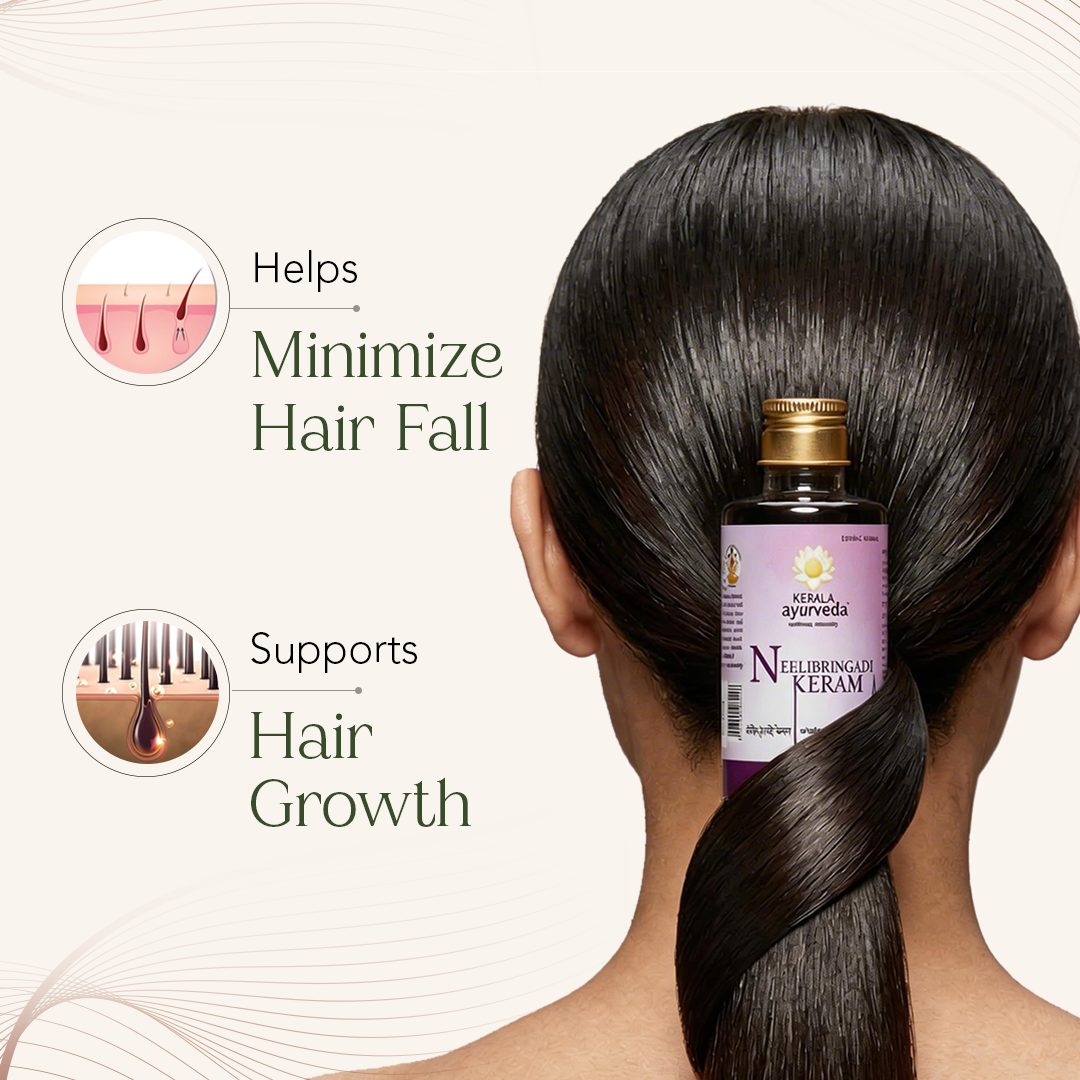
Ayurveda responds by restoring nourishment first.Neeli and Bhringraj are traditionally used to support the scalp and hair roots, while Amla offers cooling support and may help buffer excess heat. Coconut-based traditional herbal oils like Neelibhringadi Keram are also valued because they reduce dryness and improve local softness.
Diet matters just as much: regular meals, adequate protein, warm cooked foods, ghee in moderation, soaked black sesame, amla, dates, and iron-rich foods are often more helpful than restrictive cleansing when hair is already falling.
With this dosha lens clear, the next step is how to correct these imbalances safely in everyday routine.
Actionable Steps to Reduce Hair Fall and Promote Stronger Growth
Now turn that Dosha insight into a routine. The goal isn’t one “best” serum or supplement its steady correction of the triggers driving shedding.
1. Set a 2-week baseline. Note when shedding worsens, how you sleep, stress levels, menstrual changes, and whether you’re undereating protein or iron-rich foods. This helps separate common hair fall reasons in female health from simple breakage.
2. Feed regrowth daily. Build meals around protein, cooked vegetables, healthy fats, dates, black sesame, amla, and iron-rich foods. Hair is built from nourishment over time, so irregular eating weakens supply to the follicle.
3. Oil and massage gently. Warm a small amount of Neelibhringadi Keram. Massage with finger pads for 5 to 10 minutes, 2-3 times weekly. This improves local blood flow, softens a dry scalp, and supports Shiroabhyanga.If your scalp is very oily, inflamed, or itchy, use less oil and seek guidance first.
4. Protect the hair shaft. Wash with lukewarm, not hot, water. Avoid harsh cleansing, frequent heat styling, tight braids, tight buns, and rough towel drying. These don’t usually cause root-level loss, but they increase breakage and make thinning look worse.
5. Lower stress load on the hair cycle. Practice 10 minutes daily of meditation, slow breathing, yoga, or a quiet walk. Ongoing stress can raise Cortisol, which pushes more hairs into the shedding phase. In Ayurveda, it also disturbs Vata, compounding the dryness and instability that weaken follicles.
6. Use supplements carefully. Iron, zinc, and biotin may help when a deficiency exists, but more is not better. Ask a healthcare professional before starting supplements or new remedies especially if you wonder which hormone causes hair loss in females or you have thyroid, PCOS, pregnancy, or postpartum changes.
Expect change slowly. Reduced shedding often comes before visible fullness, and consistency over weeks matters more than quick fixes. That’s how you start acting on the root, not just the hair in the brush.
Need help choosing the right support?
Consult online with our Ayurvedic experts for personalized health guidance.


MORE FROM AYURVEDA
Related articles
A Step-by-Step Neelibhringadi Routine for Stronger, Healthier-Looking Hair
Neelibhringadi oiling works best as a gentle, consistent routine using an amount suited to the scalp. Sectioning the hair and applying oil directly to the...
Split Ends Won’t Fix Themselves, But Here’s How to Manage Them Naturally
Managing split ends starts with trimming damaged tips and protecting hair from further wear. Gentle detangling, conditioning, light oiling, and reduced heat and friction help...
Vata, Pitta, or Kapha: Are You Oiling Your Scalp the Wrong Way?
The blog explains how the right way to oil your scalp depends on your dosha and scalp condition. It explores how Vata, Pitta, and Kapha...
Why Young Adults Are Greying Earlier and What Ayurveda Says About It
Premature greying can involve genetics, stress, smoking, nutritional gaps, and thyroid-related issues. Ayurveda describes early greying as palitya and considers diet, digestion, lifestyle, and scalp...
Taming Frizz Naturally: 10 Simple Home Fixes That Last
Frizz often develops when a rough or damaged hair cuticle struggles to retain moisture and responds unevenly to humidity. Ayurveda associates this dryness with Vata....
Too Many Hair Products, Too Little Clarity: Can One Ayurvedic Oil Like Neelibhringadi Keram Do More?
The blog explores why hair fall, frizz, dandruff, and premature greying may stem from interconnected scalp concerns, rather than requiring separate solutions. It brings together...
Your Kitchen Already Holds the Cure: Everyday Indian Foods That Fight Hair Fall
Healthy hair starts with consistent nourishment, and everyday Indian meals can provide many of the nutrients it needs. Dal, curd, eggs, leafy greens, nuts, and...