



















Key Takeaways
Introduction
Social media pitched rice water as the ultimate natural remedy until protein buildup left thousands with stiff, snapping strands. If you’ve been relying on DIY trends to stop seasonal shedding, it’s time to understand why classical Ayurveda treats hair care as medicine, not a viral kitchen experiment. But that shortcut misses what both tradition and early research suggest: one mainly gives temporary surface smoothness, while the other is designed for longer-term scalp and breakage support.
If you’re tired of seeing more hair in the brush, Ayurveda would ask a deeper question: is it true hair fall, or is dryness, friction, and scalp irritation weakening the strands? This is where concepts like Dosha and Dhatus help us think more clearly, not more mystically. The real comparison isn’t trend versus tradition. It’s temporary coating versus ongoing support. And that difference is what makes the rice water versus Bhringraj conversation worth getting right.
The short answer: rice water is better for quick cosmetic softness, while Bhringraj in an oil base is the stronger choice for a steady, safety-aware hair care routine.
Rice Water vs Bhringraj: Real Hair Benefits Compared
The practical question isn’t which one is “better” in the abstract. It’s what you need help with right now.

So how should you choose?Rice water is mostly a strand treatment. It coats the hair shaft with starches and small amounts of amino acids, leaving hair feeling smoother for a short time. If your short-term goal is smoother-looking hair before the next wash, rice water can help.
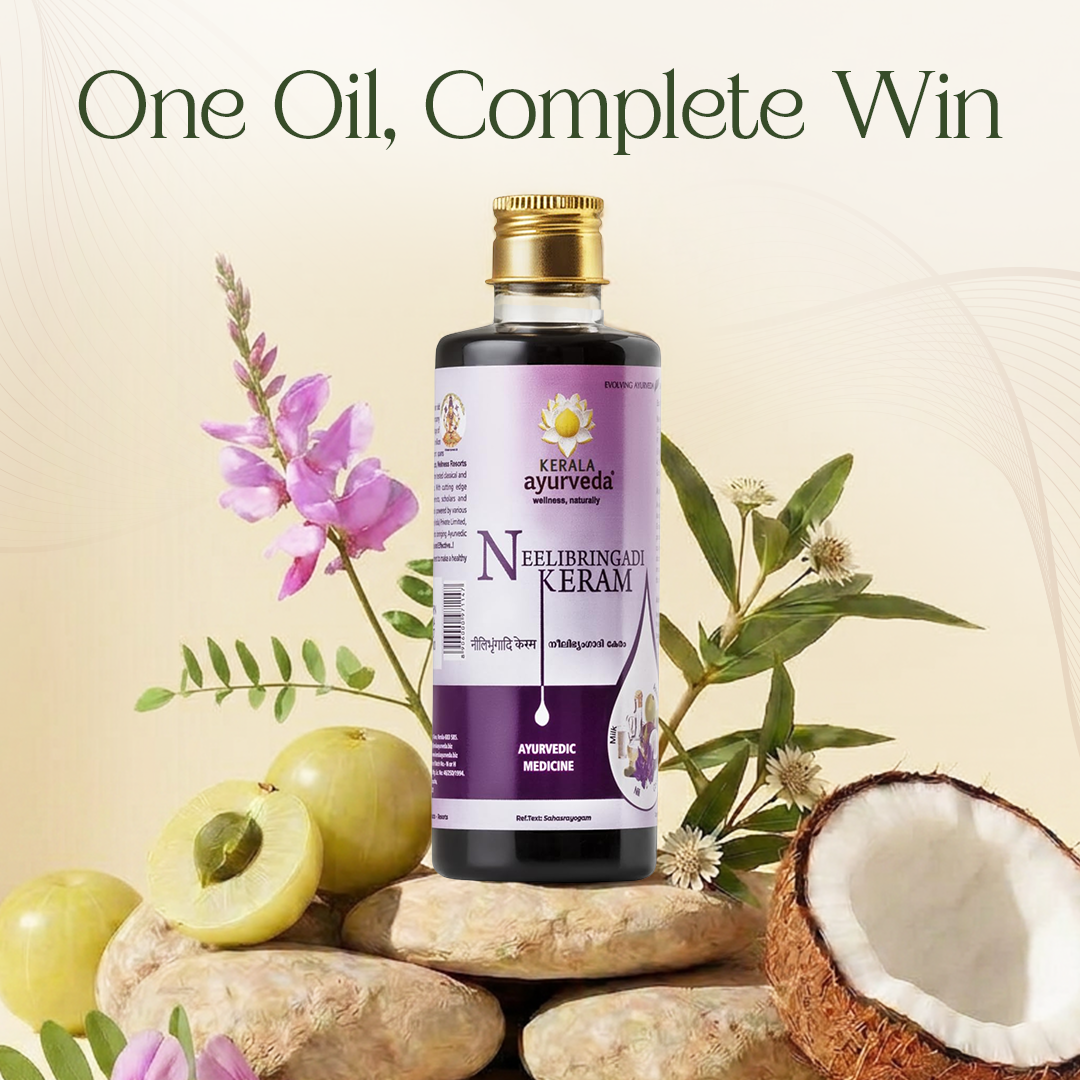
But if you’re after broader scalp support and a more complete hair care routine, Bhringraj based oil like Neelibhringadi Keram makes more sense. Its oil base does more than add shine. That’s exactly why Bhringraj’s benefits go beyond a temporary hack and why it’s worth understanding what makes the oil work.
Reviewed by Ayurvedic Experts

Dr. Shweta Netke
BAMS, 15+ years of experience.
Medical Writer
Dr. Shweta Vijay Netke is an Ayurveda Doctor and expert with over 15 years of experience in Ayurveda, wellness, and beauty. She writes to make the timeless wisdom of Ayurveda simple, practical, and relevant to modern lifestyles.
Did You Know?
"A serum’s lightweight feel does not reveal how effective it is. Fast absorption and a non-greasy finish describe the texture, not proof of hair growth."
Need help choosing the right support?
Consult online with our Ayurvedic experts for personalized health guidance.
 Request Consultation


MORE FROM AYURVEDA
Related articles
Rosemary Oil, Onion Juice or Neelibhringadi Keram: What’s the Difference?
The blog compares rosemary oil, onion juice, and Neelibhringadi Keram, highlighting differences in their ingredients, evidence, and traditional use. It emphasises choosing care based on...
Hair Fall in Monsoon: Why It Happens and How to Prevent It
Monsoon hair fall can appear worse when humidity, scalp buildup, and wet-hair breakage add to normal shedding. The blog emphasises regular cleansing, thorough drying, gentle...
How to Control Hair Fall: Causes and the Best Hair Fall Solution That Works
Increasing hair fall can involve stress, nutritional gaps, hormonal changes, scalp conditions, and damaging hair-care habits. The blog emphasises identifying possible triggers and supporting hair...
From Dull to Shiny: Natural Ways to Transform Dry Hair at Home
Hair looks dull when moisture loss, cuticle damage, heat, friction, or buildup disrupt its smooth surface. The blog highlights gentle oiling, conditioning, careful handling, and...
Post-Delivery Hair Fall: How to Stop It Without Harsh Treatments
Postpartum hair fall is usually temporary shedding caused by hormonal changes after childbirth. The blog emphasises gentle handling, mild scalp oiling, balanced nourishment, hydration, and...
Hair Care for Men: The Everyday Routine for Healthier Hair
A simple, consistent routine supports men’s hair health through scalp-appropriate cleansing, gentle oiling, conditioning, and careful styling. The blog combines these habits with Ayurveda’s emphasis...
How to Regrow Hair Naturally: What Actually Works and What Doesn’t?
Hair regrowth takes months and depends on the hair cycle, nutrition, hormones, and overall health. The blog highlights gentle Ayurvedic oiling, balanced meals, regular sleep,...
Why Hair Growth Takes Months and What Progress Really Looks Like
Visible hair regrowth takes months because follicles move through growth, transition, and resting phases. Reduced shedding, less breakage, and improved scalp comfort may appear before...
Reasons for Hair Fall in Women and How to Control It
Hair fall in women can involve hormonal changes, heredity, nutritional gaps, stress, thyroid issues, and scalp conditions. The pattern of loss can offer clues, but...
Split Ends Won’t Fix Themselves, But Here’s How to Manage Them Naturally
Managing split ends starts with trimming damaged tips and protecting hair from further wear. Gentle detangling, conditioning, light oiling, and reduced heat and friction help...
A Step-by-Step Neelibhringadi Routine for Stronger, Healthier-Looking Hair
Neelibhringadi oiling works best as a gentle, consistent routine using an amount suited to the scalp. Sectioning the hair and applying oil directly to the...
Vata, Pitta, or Kapha: Are You Oiling Your Scalp the Wrong Way?
The blog explains how the right way to oil your scalp depends on your dosha and scalp condition. It explores how Vata, Pitta, and Kapha...