














- 80+ Years of Heritage
Kerala Ayurveda has been a trusted name in authentic Ayurvedic healing for over 80 years, carrying forward the wisdom of Ayurveda while making it relevant to modern life. - A Full-Spectrum Ayurveda Organisation
Today, we serve over a million people across India and the US through wellness resorts, hospitals, clinics, academics, and manufacturing, all rooted in the timeless principles of Ayurveda’s 8,000-year-old science. - Knowledge Backed by Experience & Evidence
Our approach goes beyond classical Ayurvedic texts. We draw upon clinical experience, relevant research, and contemporary understanding to create responsible and practical health and wellness guidance. - Authenticity with Accessibility
We strive to make Ayurveda accessible and relevant to today’s consumers without compromising its authenticity or traditional foundations. - Safety First
Every recommendation is developed with safety as a priority, with potential contraindications and important precautions clearly communicated.
Key Takeaways
1. Overnight stillness can leave the knee and surrounding tissues feeling stiff on waking.
2. Start with gentle knee bends and heel slides before adding weight-bearing movement.
3. Warmth and light oil massage may help soothe stiffness.
4. Keep morning movement consistent and break up long periods of sitting.
5. Track how long stiffness lasts; persistent stiffness, heat, or swelling needs assessment.
Introduction
You push yourself up off the floor mattress, or swing your legs out of bed, and the first steps to the bathroom feel older than you do. It is a small moment, but it can shape how confident the whole day feels.
For most people, morning stiffness lasts 10 to 30 minutes before easing. To understand your own pattern, try timing how long it lasts each morning for a week. The usual cause is overnight stillness. The joint stays in one position, the tissues around it tighten, and lubrication does not circulate well until you start moving.
Ayurveda reads the same pattern through two ideas: Vata and Kapha. Your knee may be waking up under-lubricated and slow to glide, which is useful feedback about movement, warmth, and daily habits rather than just age catching up.
Causes of Morning Knee Stiffness
During the day, walking, bending and shifting position keep synovial fluid moving across your joint surfaces. During sleep, especially in long stretches without changing position, that circulation slows down. Mild fluid can pool around the joint, and low-grade inflammatory signals may become more noticeable by morning. Both add to that stiff, reluctant feeling. Muscles, tendons, and fascia also tighten when held still. A stiff knee after rest reflects both reduced lubrication and reduced tissue flexibility.
Sleep posture
If your knee stays bent, twisted, or tucked under body weight for hours, the tissues around it wake up shortened and less ready to glide. Two changes help: sleep with a pillow between your knees when on your side, and avoid sleeping with one foot tucked under the opposite knee. Ayurveda adds timing: being asleep by around 10-10.30 pm keeps the night's rest deep and the body's dryness lower, while late nights are a known trigger for Vata.
When age is part of the picture
Cartilage can thin over the years, so stiffness shows up faster even after a normal night.
Stiffness that comes with pain, grinding, tenderness or swelling, or that lasts beyond about 30 minutes, can point toward osteoarthritis and is worth having assessed. If it also comes with heat in the knee, that is the inflammatory pattern Ayurveda calls the Ama.
Ayurveda describes this as dryness and stagnation building in an underused joint, which is why warmth, oiling and regular movement are the traditional first habits. Ayurveda names the everyday causes: cold exposure around the knees, dry or cold foods, irregular meals or long fasting, overexertion, late nights, and long unbroken sitting. Each one dries the joint or leaves it still, so stiffness is worse on waking.
Reviewed by Ayurvedic Experts

Dr. Shweta Netke
BAMS, 15+ years of experience.
Medical Writer
Dr. Shweta Vijay Netke is an Ayurveda Doctor and expert with over 15 years of experience in Ayurveda, wellness, and beauty. She writes to make the timeless wisdom of Ayurveda simple, practical, and relevant to modern lifestyles.
How Movement Loosens Stiff Morning Knees
The Modern Perspective
The reason a stiff knee often improves after a few minutes is mechanical, not mysterious. Movement works like a pump. As you bend and straighten the knee, pressure inside the joint changes and spreads synovial fluid across the cartilage. Cartilage has no rich direct blood supply, so this fluid movement is also how it gets fed. At the same time, muscles and tendons warm, stretch, and contract more normally, and better blood flow and rising tissue temperature make them less resistant. Gentle motion keeps fluid circulating without overloading the joint,
Studies show that regular exercise reduces knee osteoarthritis pain and improves function, so gentle movement is usually better than waiting for stiffness to go away. Light, repeated motion works better than rest: a short walk, easy cycling, slow knee bends within comfort. Start slowly, stay below the pain threshold, and avoid jerky or deep bends first thing. If the joint becomes sharply painful or more swollen, back off and get it assessed.
The Ayurvedic Perspective
Ayurveda does not put this down to "just ageing". It reads the pattern as Vata and Kapha together: dryness and loss of flexibility (Vata), plus heaviness and sluggishness (Kapha), leaving the joint slow to wake up. That matches the modern picture of poorer lubrication, stiffer tissues, and fluid stagnation after stillness. Which of the two leads decides what helps most.
When dryness dominates
Dry, cracking, creaky stiffness that is worse in cold and eases with warmth is Vata-led. This is Sandhigatavata. Research on knee osteoarthritis has reported improvement in stiffness, pain, and movement with Ayurvedic care that combined oil application, heat, and internal herbal support.
When heaviness and swelling lead
When the knee feels heavy and puffy, stiffness lasts longer, digestion is sluggish, and the body aches more widely, Ayurveda points to Ama. The pattern is Amavata, Ama combined with aggravated Vata. Unlike pure Vata dryness, it tends to be worse after heavy meals, after a long rest, and in damp weather, and it feels heavy and sometimes warm rather than dry. Oil alone does not suit it first; the vaidya works on digestion and Ama before suggesting oiling the joints.
A simple morning sequence is: warm water, oil massage on the knees, then gentle movement, then a warm bath. Add early sleep before 10 pm, mild stretching, and avoiding long sitting or cold air on the knees through the day.
Your Ideal Morning Routine
The sequence is warm first, then move, then lightly strengthen. That order helps a stiff knee wake up with less friction.
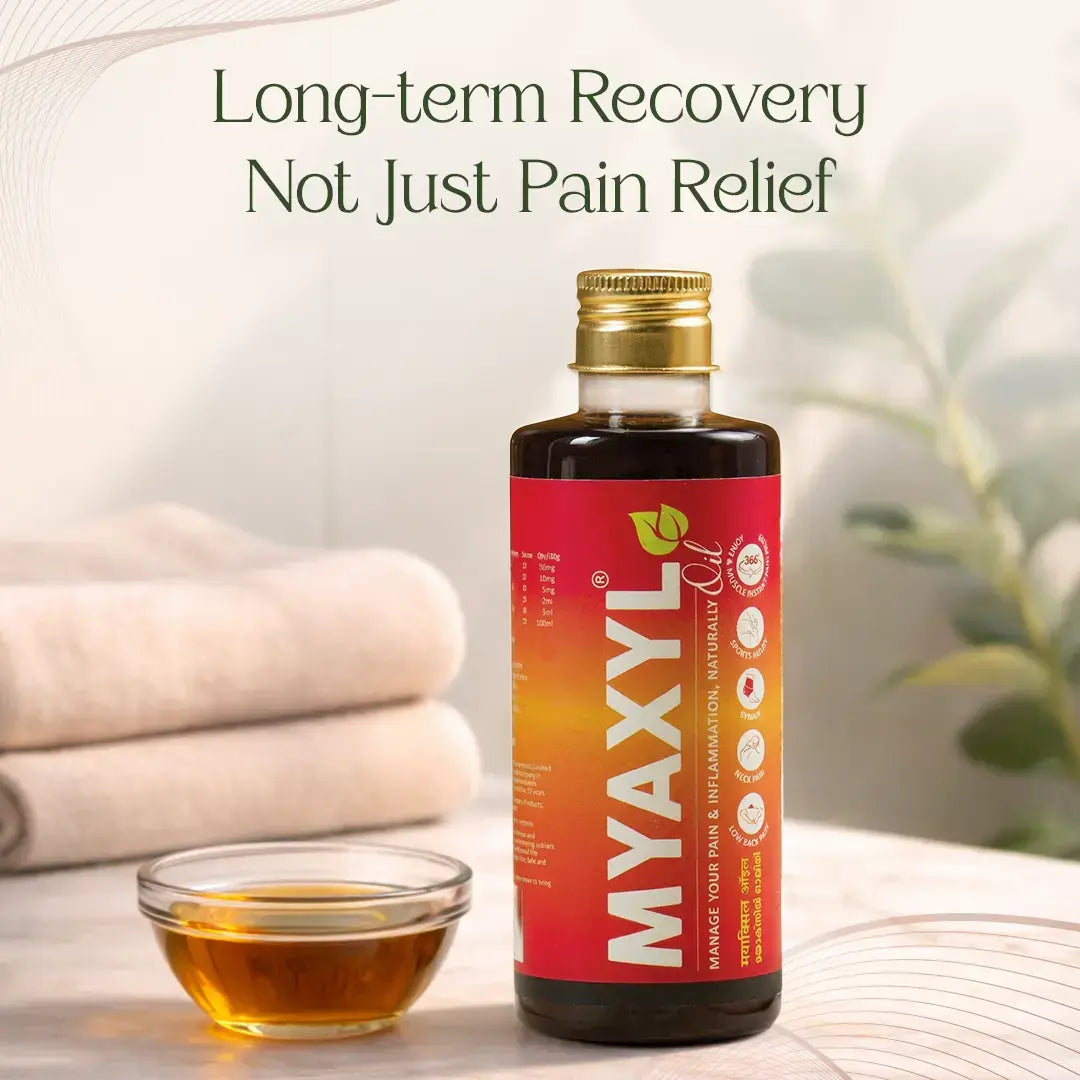
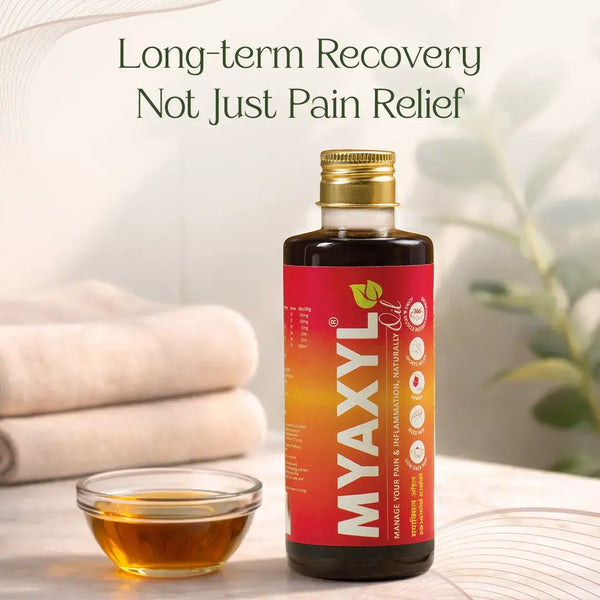
- Oil the knee for 5 to 10 minutes before you get up. Take an oil like the Myaxyl Pain Relief Oil into your palms, rub them together to warm it, and massage the knee gently in circles with no deep pressure, once or twice daily. It fits a morning routine because it needs no pre-heating, absorbs fast, and is non-sticky, so you can move straight on without oily sheets or clothes. The sesame base with Devadaru, Nandivriksha, and Rasna is what Ayurveda uses against Vata dryness, and the eucalyptus and lemongrass give a warm feel. This is a mild Abhyanga, and a warm bath after your routine is swedana: oil first, then heat. Most people notice warmth and easing within minutes, easier movement within the day, and recovery support from week 2. Technique is in How to Massage Oil Around a Painful Knee the Right Way.
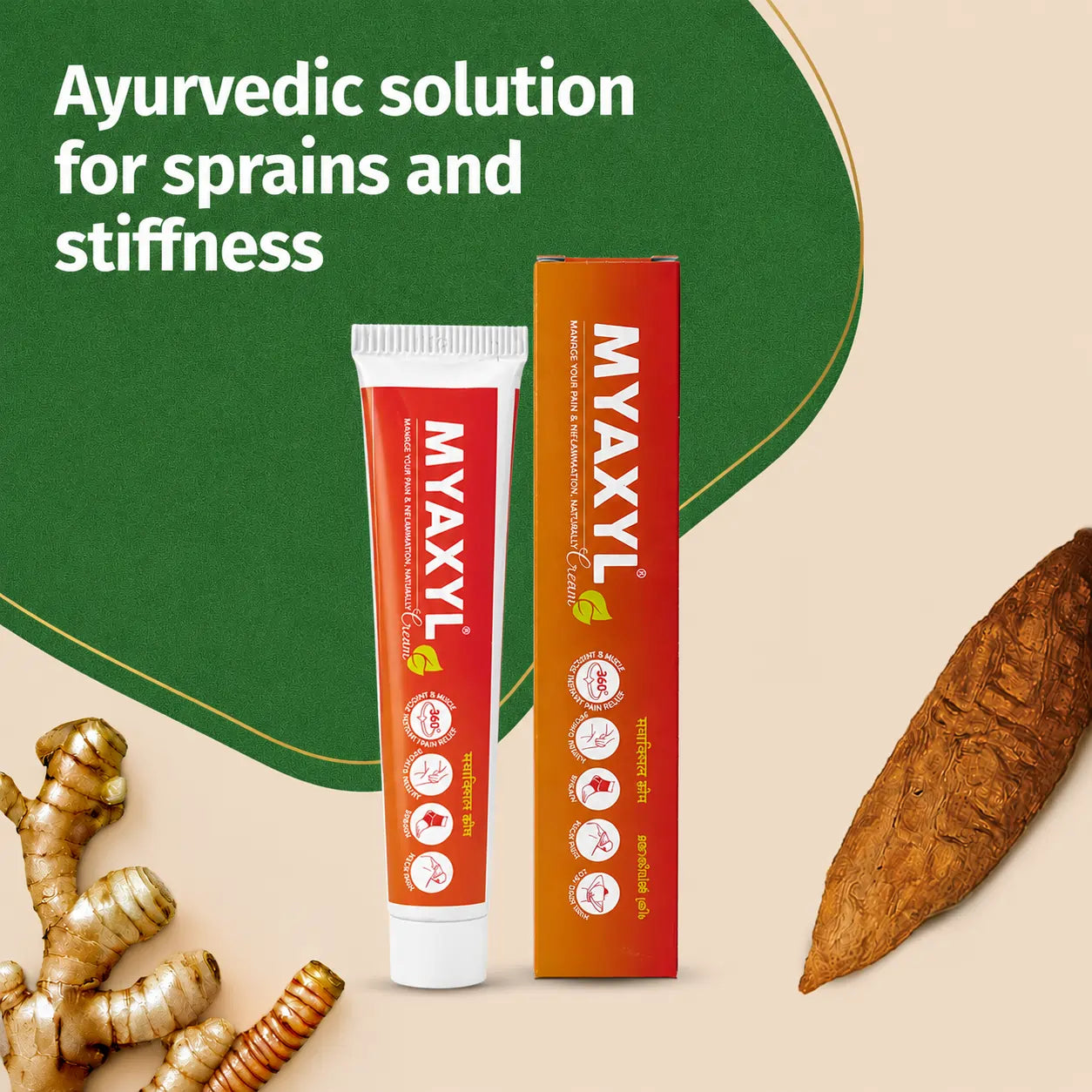
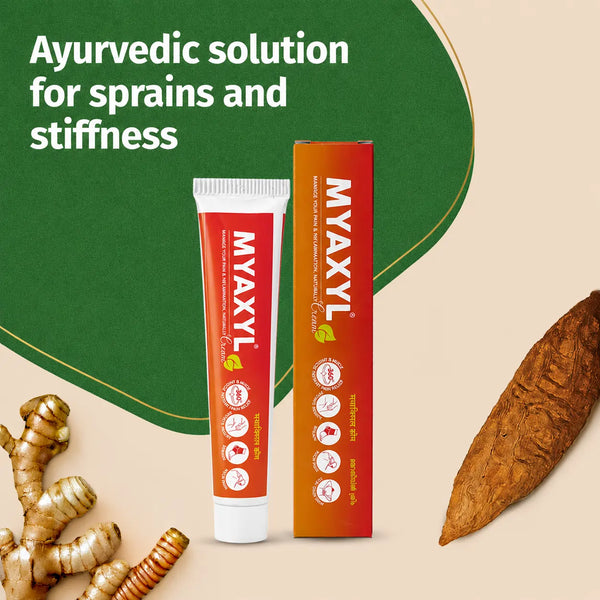
For a quick option at a desk or when travelling, Myaxyl Cream is easy to carry.
- Sit comfortably. Bend and straighten the knee 10 to 15 times, slide the heel toward the hips and back 8 to 10 times per side, and add 10 ankle pumps to clear overnight pooling. These restore motion without loading your body weight.
- Holding a chair or wall, do 8 to 10 shallow, pain-free knee bends, 10 to 15 slow marching steps, and 8 to 10 heel raises. Strong muscles around the joint give it support, which helps with stiffness after rest.
- Keep it short and don't overexert. Aim for 8 to 15 minutes every morning. Consistency matters more than intensity. Add a 2 to 3-minute movement break every 45 to 60 minutes of sitting. Most people feel a smoother start within 2 weeks and a steadier change by 4 to 6 weeks.
- Stop if you feel sharp pain or the knee gives way. See an Ayurvedic Vaidya if stiffness persists beyond a few weeks, regularly exceeds about 30 minutes, or comes with heat, marked swelling, locking, fever, or being unable to bear weight, and get medical help promptly for the last three.
Next Steps for Easier Mornings
Diet and daily routine
Ayurveda favours warm, freshly cooked, lighter meals at regular times, and avoids cold, stale, very heavy or fermented food, especially close to sleep. In practice:
- Moong dal khichdi, rice with ghee, vegetable soups, ragi porridge and well-cooked greens.
- Warm water or jeera-ginger water on waking, and a small spoon of ghee with the main meal if Vata is dominant.
- Less curd at night, fewer refrigerated and fried foods, and no skipped meals.
If stiffness keeps coming back, book an Ayurveda consultation with an Ayurvedic vaidya to find out whether dryness, heaviness, or joint overuse is behind it, and to plan your routine and therapies.
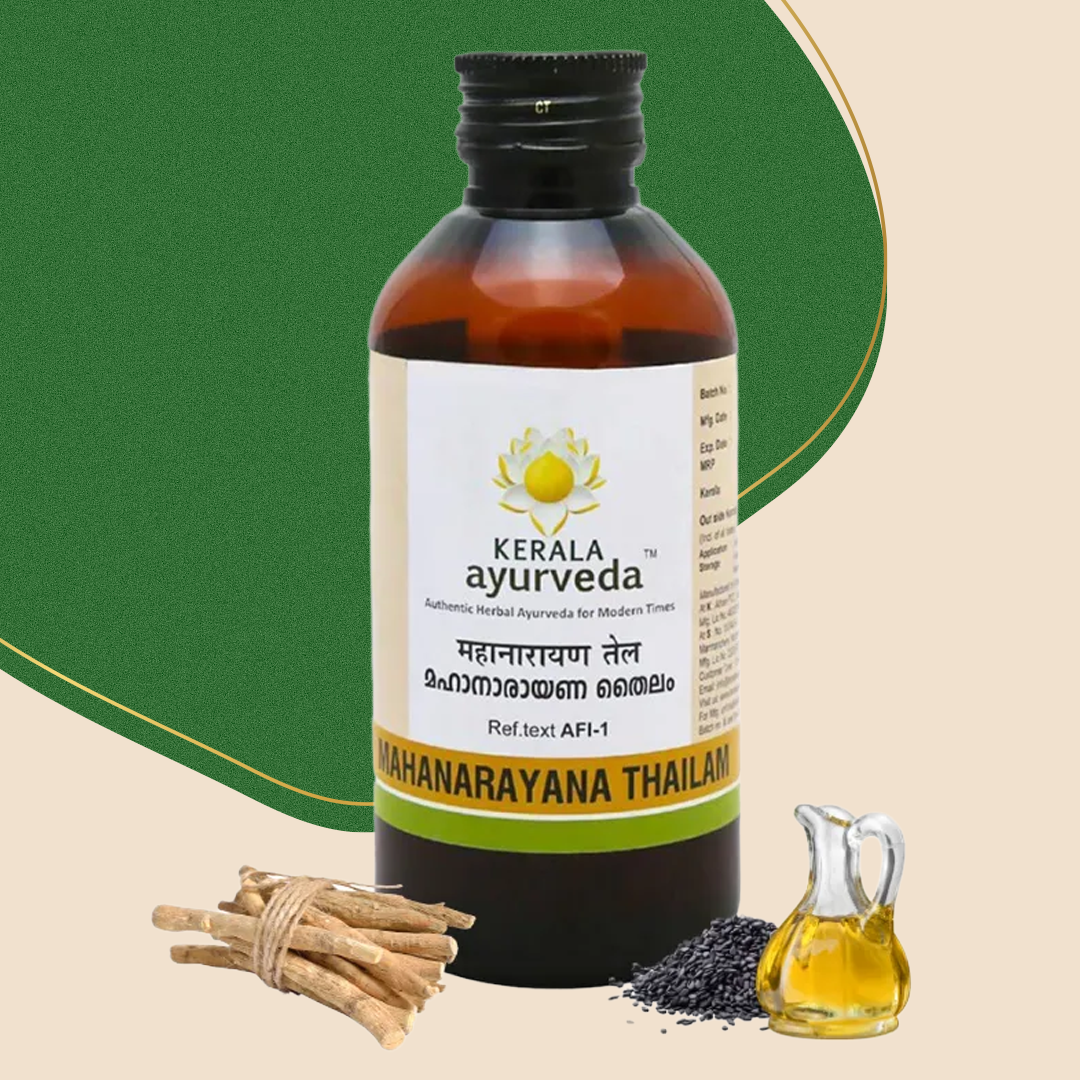
At a clinic, an Ayurvedic vaidya follows the classical order of snehana followed by swedana. For the knee, Janu basti, where warm medicated oil is held in a ring of dough around the knee, is a vaidya-led therapy. A vaidya may also recommend classical oils such as Bala Thailam or Mahanarayana Thailam along with a few herbal adjuvants like Myaxyl capsules for faster relief.
Need help choosing the right support?
Consult online with our Ayurvedic experts for personalized health guidance.
 Request Consultation





MORE FROM AYURVEDA
Related articles
Is Your Hair Growth Serum Really a Replacement for Hair Oil?
Hair growth serums and hair oils serve different purposes: serums provide scalp-targeted ingredients, while oils mainly condition hair and help reduce dryness, friction, and breakage....
Rice Water vs Bhringraj: Viral Hair Hack Meets Ayurvedic Tradition
Rice water mainly offers temporary smoothing of the hair strands, while Bhringraj-based oils such as Neelibhringadi Keram are traditionally used for ongoing scalp and hair...
Rosemary Oil, Onion Juice or Neelibhringadi Keram: What’s the Difference?
The blog compares rosemary oil, onion juice, and Neelibhringadi Keram, highlighting differences in their ingredients, evidence, and traditional use. It emphasises choosing care based on...
Hair Fall in Monsoon: Why It Happens and How to Prevent It
Monsoon hair fall can appear worse when humidity, scalp buildup, and wet-hair breakage add to normal shedding. The blog emphasises regular cleansing, thorough drying, gentle...
How to Control Hair Fall: Causes and the Best Hair Fall Solution That Works
Increasing hair fall can involve stress, nutritional gaps, hormonal changes, scalp conditions, and damaging hair-care habits. The blog emphasises identifying possible triggers and supporting hair...
From Dull to Shiny: Natural Ways to Transform Dry Hair at Home
Hair looks dull when moisture loss, cuticle damage, heat, friction, or buildup disrupt its smooth surface. The blog highlights gentle oiling, conditioning, careful handling, and...
Post-Delivery Hair Fall: How to Stop It Without Harsh Treatments
Postpartum hair fall is usually temporary shedding caused by hormonal changes after childbirth. The blog emphasises gentle handling, mild scalp oiling, balanced nourishment, hydration, and...
Hair Care for Men: The Everyday Routine for Healthier Hair
A simple, consistent routine supports men’s hair health through scalp-appropriate cleansing, gentle oiling, conditioning, and careful styling. The blog combines these habits with Ayurveda’s emphasis...
How to Regrow Hair Naturally: What Actually Works and What Doesn’t?
Hair regrowth takes months and depends on the hair cycle, nutrition, hormones, and overall health. The blog highlights gentle Ayurvedic oiling, balanced meals, regular sleep,...
Why Hair Growth Takes Months and What Progress Really Looks Like
Visible hair regrowth takes months because follicles move through growth, transition, and resting phases. Reduced shedding, less breakage, and improved scalp comfort may appear before...
Reasons for Hair Fall in Women and How to Control It
Hair fall in women can involve hormonal changes, heredity, nutritional gaps, stress, thyroid issues, and scalp conditions. The pattern of loss can offer clues, but...
Split Ends Won’t Fix Themselves, But Here’s How to Manage Them Naturally
Managing split ends starts with trimming damaged tips and protecting hair from further wear. Gentle detangling, conditioning, light oiling, and reduced heat and friction help...
A Step-by-Step Neelibhringadi Routine for Stronger, Healthier-Looking Hair
Neelibhringadi oiling works best as a gentle, consistent routine using an amount suited to the scalp. Sectioning the hair and applying oil directly to the...
Vata, Pitta, or Kapha: Are You Oiling Your Scalp the Wrong Way?
The blog explains how the right way to oil your scalp depends on your dosha and scalp condition. It explores how Vata, Pitta, and Kapha...
Why Young Adults Are Greying Earlier and What Ayurveda Says About It
Premature greying can involve genetics, stress, smoking, nutritional gaps, and thyroid-related issues. Ayurveda describes early greying as palitya and considers diet, digestion, lifestyle, and scalp...
Taming Frizz Naturally: 10 Simple Home Fixes That Last
Frizz often develops when a rough or damaged hair cuticle struggles to retain moisture and responds unevenly to humidity. Ayurveda associates this dryness with Vata....
Too Many Hair Products, Too Little Clarity: Can One Ayurvedic Oil Like Neelibhringadi Keram Do More?
The blog explores why hair fall, frizz, dandruff, and premature greying may stem from interconnected scalp concerns, rather than requiring separate solutions. It brings together...
Your Kitchen Already Holds the Cure: Everyday Indian Foods That Fight Hair Fall
Healthy hair starts with consistent nourishment, and everyday Indian meals can provide many of the nutrients it needs. Dal, curd, eggs, leafy greens, nuts, and...
The Hair-Fall Mistake You May Be Making After Every Workout
Working out does not usually cause hair loss directly, but tight hairstyles, sweat buildup, and rough handling afterward can contribute to irritation and breakage. The...
Where and When Does Your Knee Hurt? The Pattern May Matter More Than You Think
Knee pain can have different causes depending on where it hurts and which movements trigger it. The blog combines these clues with Ayurveda’s traditional descriptions...
Looking for an Ayurvedic Oil for Knee Pain? Ask These 7 Questions First
Choosing an Ayurvedic knee oil involves considering your symptoms, ingredients, preparation method, and ease of use. The blog uses seven questions to guide that choice,...
Knee Pain on Stairs? Your Knees May Be Telling You More Than You Think
Knee pain on stairs can reflect increased pressure around the kneecap, muscle weakness, or joint changes. This blog explains why descending often hurts more and...
How to Massage Oil Around a Painful Knee the Right Way
Gentle technique and consistency are central to the knee oil massage routine outlined in this blog. It explains how light strokes around the knee, thigh,...
Is Your Knee Warm, Swollen or Unstable? Don't Reach for Massage Just Yet
A warm, swollen, or unstable knee needs careful attention before massage. This blog explains how pain, swelling, and sudden changes in stability can guide the...
Why Do Knees Feel Stiffer With Age? An Ayurvedic Perspective
Knees stiffen with age as cartilage thins and the muscles around them weaken, and Ayurveda reads the same change as Vata rising in the later...
Knee Pain Exercises: When to Keep Moving and When to Ease Off
A sore knee usually does better with the right amount of movement than with complete rest or pushing through. The blog shows how to tell...
Back Pain Isn't One Problem: How to Read the Location, Triggers, and What to Do Next
Back pain between the shoulder blades, in the middle back or low down usually comes from different structures and different daily habits, and what sets...
Not All Joint Pain Feels the Same: An Ayurvedic Guide to Reading the Pattern
A Vaidya reads a painful knee by how it feels: dry and cracking, hot and red, or heavy and puffy. The blog explains how Ayurveda...
What Ayurveda Says About Knee Stiffness: Understanding Janu Sandhi and Sandhigata Vata
Ayurveda reads a stiff, creaky knee as Vata drying out the Janu Sandhi (knee joint), a pattern the classical texts call Sandhigata Vata. The blog...
Lower Back Pain After Sitting All Day? Here's What Your Body May Be Trying to Tell You
Hours of unbroken sitting keep your lower back under load, tighten your hips, and weaken the muscles that should support it. Learn how to read...
Does Warm Oil Help Lower Back Pain? What Massage Can and Can't Do
Gentle oil massage eases a stiff lower back because warmth, touch, light pressure and slow rhythm each help tight muscles relax. Learn how it works,...