








Key Takeaways
1. Ayurveda sees a healthy knee as a balance between Vata, which moves the joint, and Shleshaka Kapha, which keeps it lubricated.
2. When Vata rises and dries the joint, it settles there as Sandhigata Vata: pain, stiffness, crackling, and a shrinking range of movement.
3. Cold, dry food and weather, irregular meals, late nights, long sitting, overexertion, and age all push Vata up at the knee.
4. Home care follows the classical order: oil the joint first, then move it, and support both with warm, regular meals and an early night.
5. A Vaidya can add Snehana, Swedana and Janu Basti; fever, a hot red knee, locking or being unable to bear weight need prompt medical help.
Introduction
Have you ever stood up after sitting through a long meeting or getting up from the floor after puja, only to find your knee stiff and reluctant to move? Those first few steps can tell you more about your knee health than you realise.
Knee stiffness is more common than you might think. Nearly 595 million people worldwide were living with osteoarthritis in 2020, and the knee was its most commonly affected joint.
Modern medicine often looks at knee stiffness through the lens of cartilage changes, inflammation, and joint degeneration. Ayurveda takes another approach. It looks at the qualities that keep a joint healthy and asks: has the knee lost its natural softness and lubrication (Snigdhata)? Or is the heaviness of Ama (metabolic waste associated with incomplete digestion) interfering with normal function?
Here is a simple way to understand the difference. Does your knee feel crackly and tight, ease with warmth, and become more uncomfortable in cold, dry weather? This may point towards a Vata-dominant pattern. Does it feel heavy and puffy, become worse in damp weather or after heavy meals, and accompany sluggish digestion or a coated tongue? Ama may be contributing.For a hot or visibly swollen knee, read: Is Your Knee Warm, Swollen or Unstable? Don't Reach for Massage Just Yet first.
To understand the dryness-related pattern, let's first look at how Ayurveda understands the knee joint.
Janu Sandhi: How Ayurveda Sees the Knee
Think of your knee as a joint that needs two things to work comfortably: movement and smoothness.
In Ayurveda, Vata, the dosha of air and space, governs all movement in the body, and it carries the qualities of dryness, cold, lightness, and roughness. Shleshaka Kapha, the form of Kapha that lives in the joints, does the opposite job: it keeps the surfaces soft, oily, and gliding.
In simple terms, Vata helps your knee bend and straighten, while Shleshaka Kapha helps those movements happen smoothly. Both need to remain in balance.
Ayurveda calls that smooth, well-oiled state snigdhata. When Vata rises, its dry and rough qualities start to overpower the joint's lubrication, and the knee feels tight after rest, cracks on bending, and slowly loses how far it can bend and straighten.
The texts trace this deeper, to two of the body's seven tissues (dhatus). Asthi dhatu is the bone, the frame the knee works on, and Majja dhatu is the marrow and soft inner tissue that fills and nourishes it. Classical texts describe Asthi as a home of Vata, so whatever aggravates Vata tends to wear Asthi down. When Vata dries the system, nourishment stops reaching these deeper layers, and the joint loses its cushioning and resilience. This is also why knees stiffen as we age, since Vata naturally rises in the later years of life, a story told in full in link: Why Do Knees Feel Stiffer With Age? An Ayurvedic Perspective
So, what happens when Vata settles in the knee? Classical Ayurveda has a specific term for it.
Sandhigata Vata: When Vata Settles in the Knee
Sandhigata Vata means aggravated Vata that has settled in a joint. At the knee, it is called Janu Sandhigata Vata, and the classical description is specific:
- Sandhi shula and sandhi stambha: joint pain and joint stiffness, worst after rest.
- Painful movement: pain on bending and straightening, often with cracking or creaking.
- Vata-purna-driti-sparsha: swelling that feels like a leather bag filled with air when pressed, the sign of a joint that is dry, irregular, and no longer smoothly cushioned.
- Unsteady loading: tightness after sitting, a slightly unsteady walk, and pain that rises with stairs, squatting, or sudden movement, sometimes with wasting of the thigh muscles.
Ayurveda is naming a loss of joint function here, not just discomfort. That leather-bag swelling is the sign to respect: a knee that is visibly puffy, warm, or unstable needs an assessment with an Ayurvedic Vaidya first, not oil.
Did You Know?
"Cartilage has no blood vessels of its own. It is fed by the fluid inside the joint, which movement helps circulate, so a knee that is rarely moved is a knee that is poorly fed."
Research suggests this classical picture overlaps closely with knee osteoarthritis, and Ayurvedic studies treat the two as matching in cause, process, and symptoms. Thinning cartilage, less joint fluid, crackling, and weak thigh muscles are the modern words for Vata drying and roughening the joint space.
Imagine a door hinge losing its oil. The surfaces stop gliding smoothly, friction climbs, protective padding wears down, and movement becomes noisy and effortful. In the body, that translates to less fluid cushioning, more stress on cartilage and surrounding tissues, and reflex tightening of nearby muscles, which further reduces flexibility. So care has to do two things together: lubricate the joint, then move it.
What Dries the Knee, and Why It Differs Between People
Ayurveda calls the causes of a disease its nidana, and for a Vata knee, most of them are ordinary daily life:
- Daily loading: sitting cross-legged on the floor, squatting on an Indian toilet, climbing temple steps or the stairs at home, long standing, kneeling for floor tasks, jerky exercise, and old injuries.
- Weather: cold, dry winters, sleeping with the AC or fan on bare legs, and a cold monsoon commute.
- Food habits: dry, light or cold food, skipped or irregular meals, and long fasts.
- Lifestyle and age: late nights, poor sleep, long sitting followed by sudden effort, and the natural rise of Vata after middle age.
The same causes land differently in different people. A person with a Vata-leaning constitution, lean with dry skin, cold hands, and light sleep, tends to feel it early and in both knees. After an old fall or sports injury, Vata often lodges in that one weakened knee. And in some people, the problem is less dryness than blockage.
That is the one distinction worth learning, using the home check in the introduction. A dry Vata knee needs oil and regularity. A knee burdened with Ama clogs the channels that feed the joint, so it needs lighter, warm food and better digestion first, such as warm ginger water, less curd and fried food, and an early dinner, with a Vaidya deciding when oil comes in. Many knees show a little of both, which is exactly what a consultation sorts out.
Home Care: Oil the Joint, Then Move It
First restore snigdhata, then movement. Oil softens tight tissue, reduces friction, relaxes the muscles that guard a sore knee, and improves local circulation; movement then spreads the joint's own fluid through the cartilage.
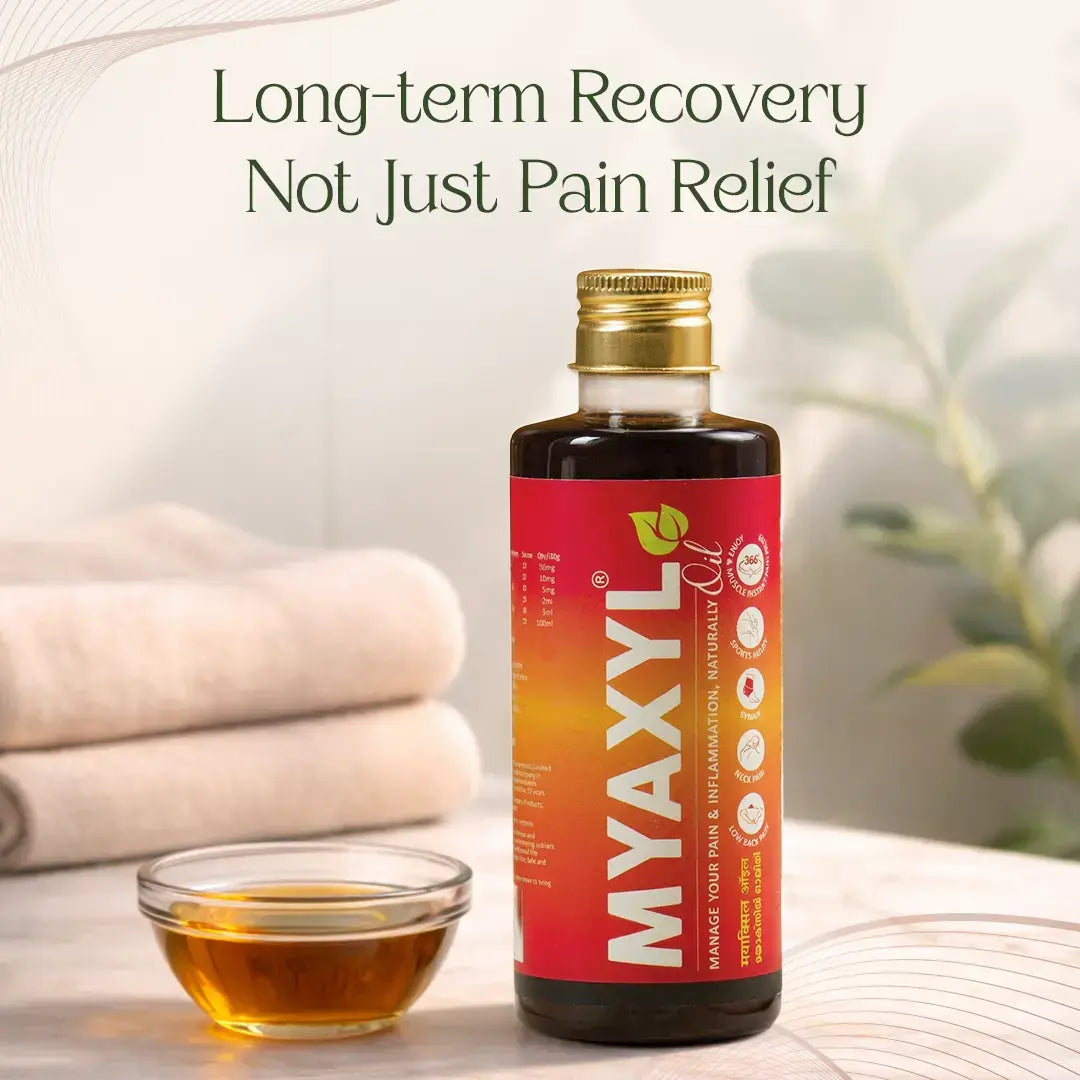
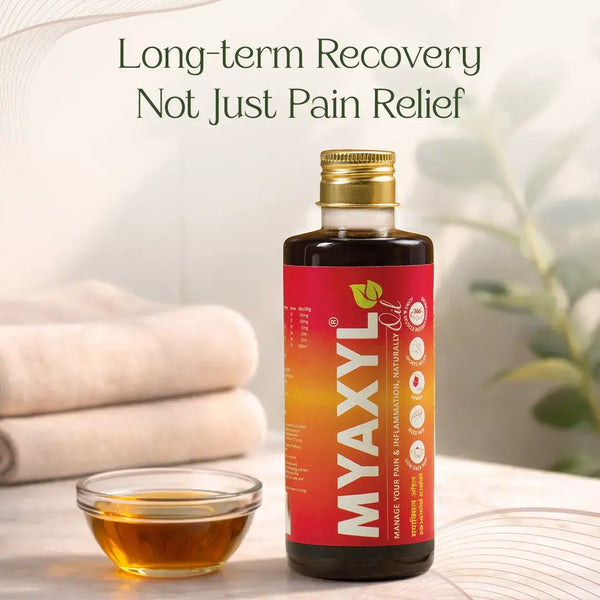
- Oil the knee (Snehana). Take about 5 to 10 ml of a pain-relieving oil like Myaxyl Pain Relief Oil into your palms and rub them together to warm it; no pre-heating needed. Its sesame base is the classical Vata-calming oil, carried with Devadaru, Nandivriksha and Rasna, herbs traditionally used for stiff Vata joints, plus eucalyptus and lemongrass. Massage gently in circles around the knee with no deep pressure, once or twice daily. About 5 minutes before your bath works well, and the warm bath that follows acts as a simple home Swedana. Expect warmth and easing within minutes, easier movement within the day, and recovery support building from two weeks. The technique is in link: How to Massage Oil Around a Painful Knee the Right Way.
- Move the oiled joint. Follow with 5 to 10 minutes of gentle movement, 4 to 5 days a week, because complete rest tends to worsen weakness and stiffness. Sitting on a chair, slide one heel back and forth to bend and straighten the knee 10 times each leg, for two rounds. Holding a table, bend both knees slightly as if starting to sit, then rise, 8 to 10 times. Three days a week, stand up from a chair without using your hands 8 times to strengthen the thigh and hip muscles that take load off the joint. For how to build up, see Knee Pain Exercises: When to Keep Moving and When to Ease Off.
- Eat and live for Vata (Dinacharya). Favour warm, moist, freshly cooked food: moong dal, cooked vegetables, rice with a little ghee, garlic in the dal tadka, and a cup of warm milk at night. Cut back on fridge-cold drinks, dry snacks like puffed rice and chips, and raw salads at night. Eat breakfast around 8 to 9 am, lunch around 12 to 1 pm, and dinner by 7 to 8 pm; sleep by 10 to 10:30 pm, and take a 2 to 3 minute movement break every 30 to 45 minutes of sitting.
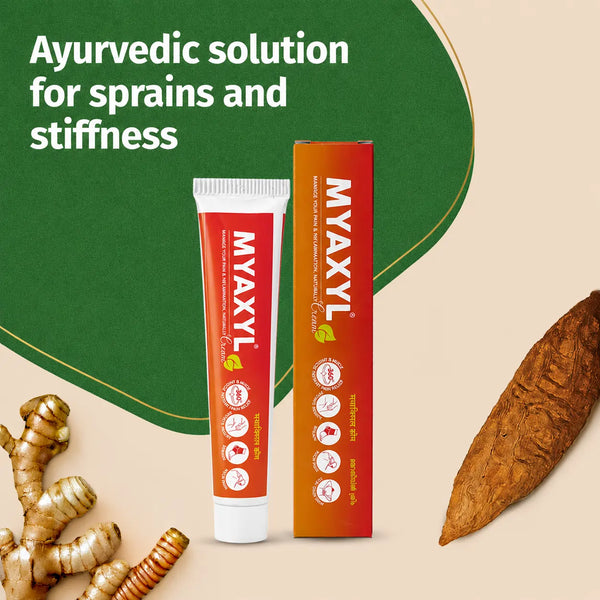
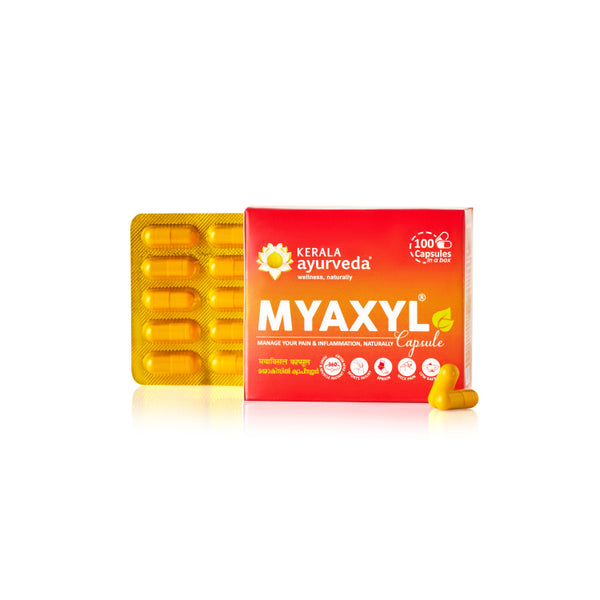
Myaxyl Cream is the quick option at a desk or while travelling. Myaxyl Capsules (Sallaki, Haridra, Sunthi and Maricha) support the joint from within and work best combined with the oil.
Reviewed by Ayurvedic Experts

Dr. Shweta Netke
BAMS, 15+ years of experience.
Medical Writer
Dr. Shweta Vijay Netke is an Ayurveda Doctor and expert with over 15 years of experience in Ayurveda, wellness, and beauty. She writes to make the timeless wisdom of Ayurveda simple, practical, and relevant to modern lifestyles.
Clinic Care and When to Get Checked
When stiffness is established, care follows a set order. In a Kerala Ayurveda clinic, a Vaidya may begin with Snehana to soften and lubricate the tissue, then Swedana such as Patra Pinda Sveda, warm bundles of herbal leaves that loosen the tissue and help the oil settle in. Janu Basti follows, where warm medicated oil is held in a ring of dough over the knee, typically for 20 to 30 minutes per session over 7 to 14 days, to keep steady heat and oil on the joint. Basti, a medicated enema, is the classical prime therapy for Vata and is given when the Vaidya judges it suitable.
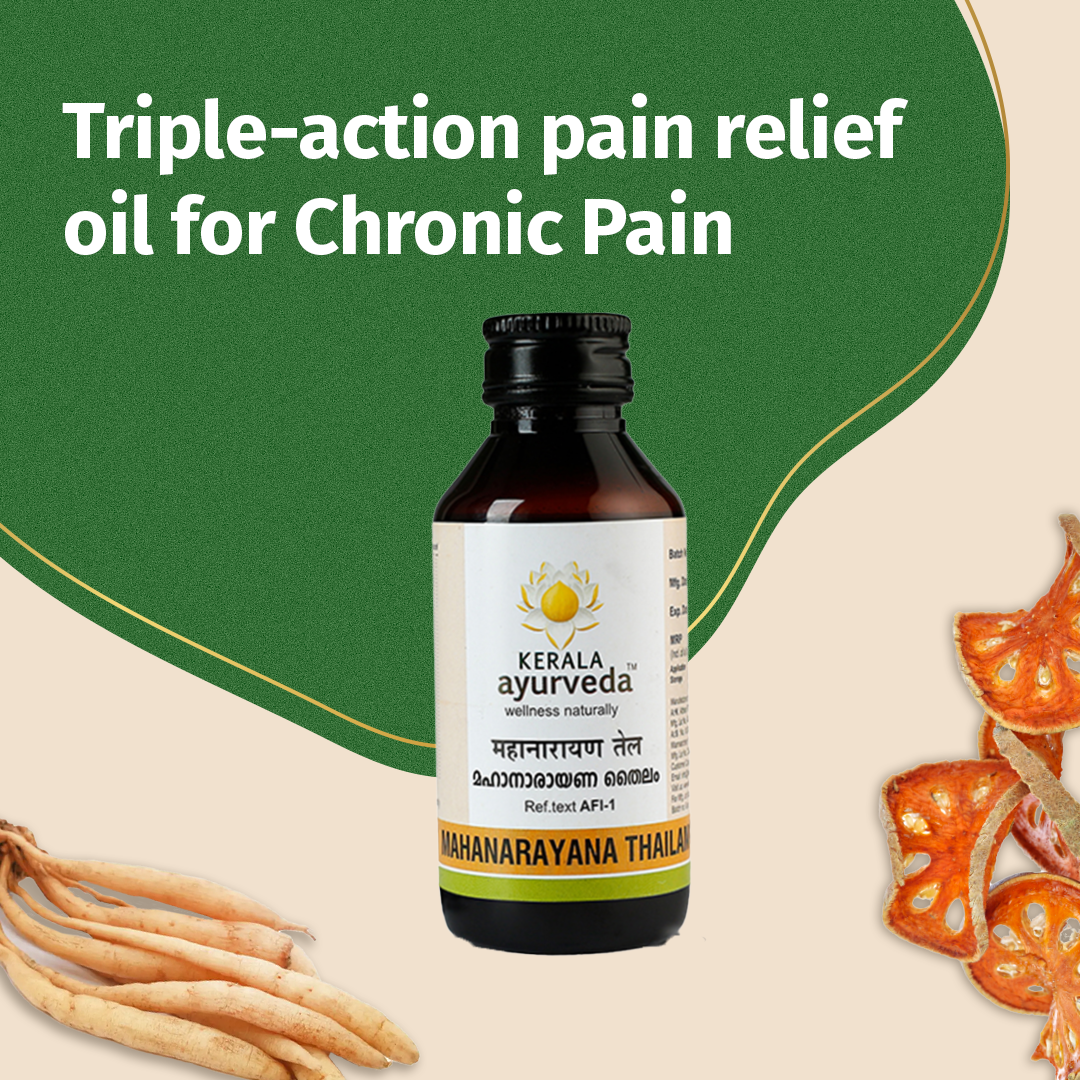
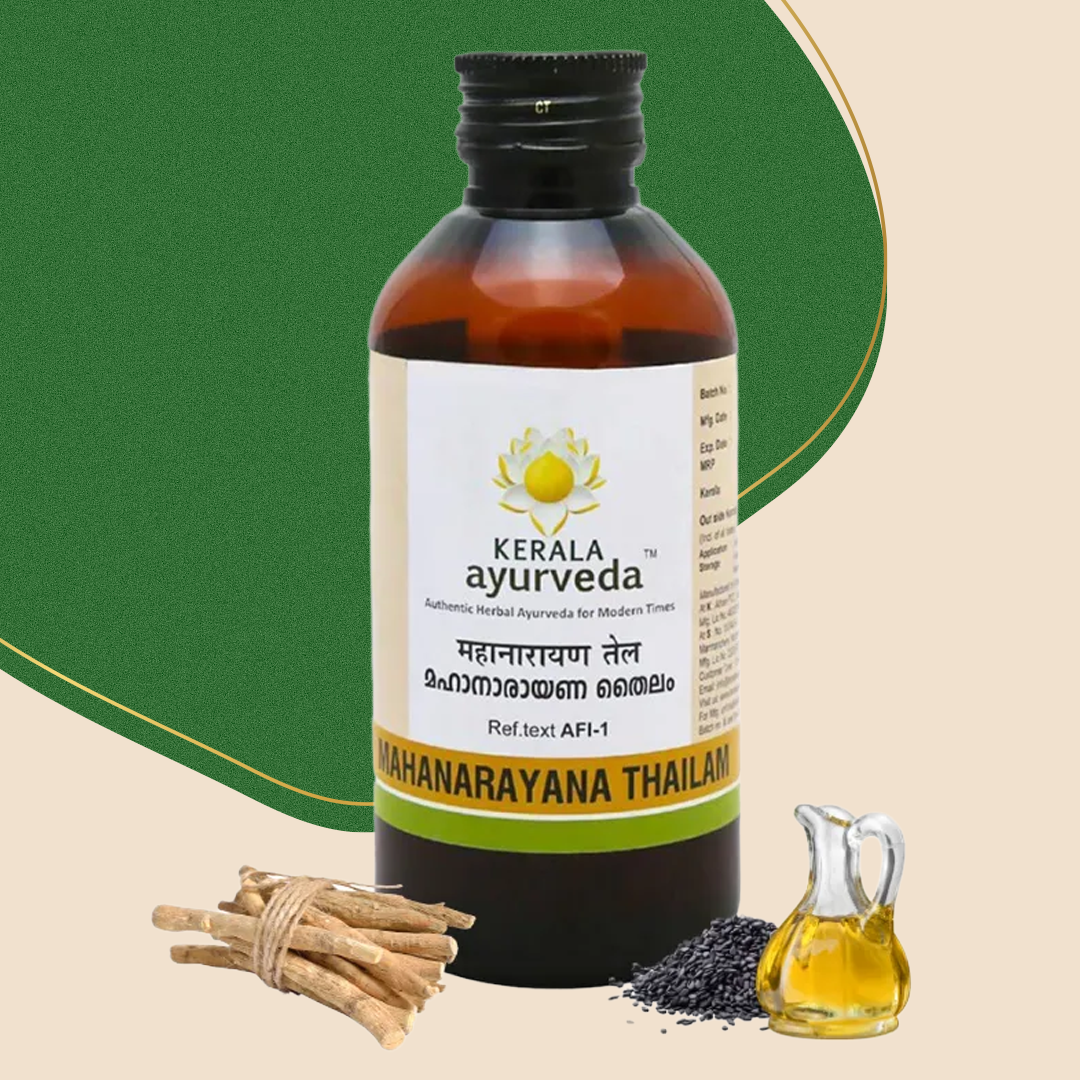
A Vaidya may also recommend classical thailams such as Mahanarayana, Dhanwantharam or Ksheerabala, and internal herbs such as guggulu or ashwagandha, chosen for your constitution, digestion and the season.
Book a consultation if stiffness has lasted more than four weeks, keeps coming back, or you cannot tell whether your knee is dry or heavy. Get medical help promptly for fever, a hot, red or suddenly swollen knee, locking, pain after a fall or twist, or if you cannot bear weight. If your knee is simply dry, stiff, and crackly, start with oil and movement today, and let a Kerala Ayurveda Vaidya read your pattern properly.
Need help choosing the right support?
Consult online with our Ayurvedic experts for personalized health guidance.
 Request Consultation




MORE FROM AYURVEDA
Related articles
Is Your Hair Growth Serum Really a Replacement for Hair Oil?
Hair growth serums and hair oils serve different purposes: serums provide scalp-targeted ingredients, while oils mainly condition hair and help reduce dryness, friction, and breakage....
Rice Water vs Bhringraj: Viral Hair Hack Meets Ayurvedic Tradition
Rice water mainly offers temporary smoothing of the hair strands, while Bhringraj-based oils such as Neelibhringadi Keram are traditionally used for ongoing scalp and hair...
Rosemary Oil, Onion Juice or Neelibhringadi Keram: What’s the Difference?
The blog compares rosemary oil, onion juice, and Neelibhringadi Keram, highlighting differences in their ingredients, evidence, and traditional use. It emphasises choosing care based on...
Hair Fall in Monsoon: Why It Happens and How to Prevent It
Monsoon hair fall can appear worse when humidity, scalp buildup, and wet-hair breakage add to normal shedding. The blog emphasises regular cleansing, thorough drying, gentle...
How to Control Hair Fall: Causes and the Best Hair Fall Solution That Works
Increasing hair fall can involve stress, nutritional gaps, hormonal changes, scalp conditions, and damaging hair-care habits. The blog emphasises identifying possible triggers and supporting hair...
From Dull to Shiny: Natural Ways to Transform Dry Hair at Home
Hair looks dull when moisture loss, cuticle damage, heat, friction, or buildup disrupt its smooth surface. The blog highlights gentle oiling, conditioning, careful handling, and...
Post-Delivery Hair Fall: How to Stop It Without Harsh Treatments
Postpartum hair fall is usually temporary shedding caused by hormonal changes after childbirth. The blog emphasises gentle handling, mild scalp oiling, balanced nourishment, hydration, and...
Hair Care for Men: The Everyday Routine for Healthier Hair
A simple, consistent routine supports men’s hair health through scalp-appropriate cleansing, gentle oiling, conditioning, and careful styling. The blog combines these habits with Ayurveda’s emphasis...
How to Regrow Hair Naturally: What Actually Works and What Doesn’t?
Hair regrowth takes months and depends on the hair cycle, nutrition, hormones, and overall health. The blog highlights gentle Ayurvedic oiling, balanced meals, regular sleep,...
Why Hair Growth Takes Months and What Progress Really Looks Like
Visible hair regrowth takes months because follicles move through growth, transition, and resting phases. Reduced shedding, less breakage, and improved scalp comfort may appear before...
Reasons for Hair Fall in Women and How to Control It
Hair fall in women can involve hormonal changes, heredity, nutritional gaps, stress, thyroid issues, and scalp conditions. The pattern of loss can offer clues, but...
Split Ends Won’t Fix Themselves, But Here’s How to Manage Them Naturally
Managing split ends starts with trimming damaged tips and protecting hair from further wear. Gentle detangling, conditioning, light oiling, and reduced heat and friction help...
A Step-by-Step Neelibhringadi Routine for Stronger, Healthier-Looking Hair
Neelibhringadi oiling works best as a gentle, consistent routine using an amount suited to the scalp. Sectioning the hair and applying oil directly to the...
Vata, Pitta, or Kapha: Are You Oiling Your Scalp the Wrong Way?
The blog explains how the right way to oil your scalp depends on your dosha and scalp condition. It explores how Vata, Pitta, and Kapha...
Why Young Adults Are Greying Earlier and What Ayurveda Says About It
Premature greying can involve genetics, stress, smoking, nutritional gaps, and thyroid-related issues. Ayurveda describes early greying as palitya and considers diet, digestion, lifestyle, and scalp...
Taming Frizz Naturally: 10 Simple Home Fixes That Last
Frizz often develops when a rough or damaged hair cuticle struggles to retain moisture and responds unevenly to humidity. Ayurveda associates this dryness with Vata....
Too Many Hair Products, Too Little Clarity: Can One Ayurvedic Oil Like Neelibhringadi Keram Do More?
The blog explores why hair fall, frizz, dandruff, and premature greying may stem from interconnected scalp concerns, rather than requiring separate solutions. It brings together...
Your Kitchen Already Holds the Cure: Everyday Indian Foods That Fight Hair Fall
Healthy hair starts with consistent nourishment, and everyday Indian meals can provide many of the nutrients it needs. Dal, curd, eggs, leafy greens, nuts, and...
The Hair-Fall Mistake You May Be Making After Every Workout
Working out does not usually cause hair loss directly, but tight hairstyles, sweat buildup, and rough handling afterward can contribute to irritation and breakage. The...
Where and When Does Your Knee Hurt? The Pattern May Matter More Than You Think
Knee pain can have different causes depending on where it hurts and which movements trigger it. The blog combines these clues with Ayurveda’s traditional descriptions...
Looking for an Ayurvedic Oil for Knee Pain? Ask These 7 Questions First
Choosing an Ayurvedic knee oil involves considering your symptoms, ingredients, preparation method, and ease of use. The blog uses seven questions to guide that choice,...
Knee Pain on Stairs? Your Knees May Be Telling You More Than You Think
Knee pain on stairs can reflect increased pressure around the kneecap, muscle weakness, or joint changes. This blog explains why descending often hurts more and...
How to Massage Oil Around a Painful Knee the Right Way
Gentle technique and consistency are central to the knee oil massage routine outlined in this blog. It explains how light strokes around the knee, thigh,...
Knees Stiff When You Wake Up? Here's What It Could Mean
Morning knee stiffness can follow hours of stillness, leaving the joint and surrounding tissues slow to move comfortably. This blog explores modern and Ayurvedic explanations...
Is Your Knee Warm, Swollen or Unstable? Don't Reach for Massage Just Yet
A warm, swollen, or unstable knee needs careful attention before massage. This blog explains how pain, swelling, and sudden changes in stability can guide the...
Why Do Knees Feel Stiffer With Age? An Ayurvedic Perspective
Knees stiffen with age as cartilage thins and the muscles around them weaken, and Ayurveda reads the same change as Vata rising in the later...
Knee Pain Exercises: When to Keep Moving and When to Ease Off
A sore knee usually does better with the right amount of movement than with complete rest or pushing through. The blog shows how to tell...
Back Pain Isn't One Problem: How to Read the Location, Triggers, and What to Do Next
Back pain between the shoulder blades, in the middle back or low down usually comes from different structures and different daily habits, and what sets...
Not All Joint Pain Feels the Same: An Ayurvedic Guide to Reading the Pattern
A Vaidya reads a painful knee by how it feels: dry and cracking, hot and red, or heavy and puffy. The blog explains how Ayurveda...
Lower Back Pain After Sitting All Day? Here's What Your Body May Be Trying to Tell You
Hours of unbroken sitting keep your lower back under load, tighten your hips, and weaken the muscles that should support it. Learn how to read...
Does Warm Oil Help Lower Back Pain? What Massage Can and Can't Do
Gentle oil massage eases a stiff lower back because warmth, touch, light pressure and slow rhythm each help tight muscles relax. Learn how it works,...